Today, I’d like to share the story of my eight-year journey in grinding wheel sales—a journey in which AI helped me turn the tables and become the top sales performer.
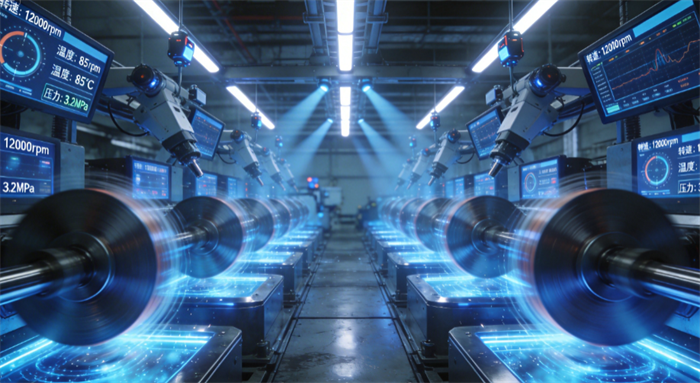
Over these eight years in grinding wheel sales, I’ve visited machinery factories, tool manufacturers and aerospace component workshops of all sizes. To others, these black, hard grinding tools are merely ordinary industrial consumables, but to me, they are the ‘teeth of industry’— and they’re also widely recognised in the industry as ‘hard to sell’.
Back then, when visiting clients, I relied on my legs, a smooth tongue and my network of contacts. With a thick stack of grinding wheel samples in my pocket, I’d spend most of the day in the workshop. I’d try to strike up a rapport with the master craftsmen, discuss specifications, compare hardness levels, and talk until my lips were chapped just to land a single order. Yet even when I gave it my all, I repeatedly hit a brick wall: clients complained about slow quality checks, poor precision and high wastage; and the moment competitors slashed their prices, our regular customers would walk away without a second thought.
It wasn't until AI entered my sales career that I finally broke free from ‘grind-it-out sales’. Thanks to smart grinding wheels and AI-driven digital solutions, I transformed from the bottom-of-the-barrel salesperson into the company’s top-performing deal-maker.
I. The Three Major Pain Points of Traditional Grinding Wheel Sales: Why Does the Precision Grinding Industry Need an AI Revolution?
Those who haven’t worked in this industry simply cannot understand the hardships of selling grinding wheels. We aren’t selling ordinary consumables; we’re selling core tools that determine workpiece precision and production efficiency. Clients have many concerns and the barriers to entry are high. In the early days, I was left speechless every day by three questions.
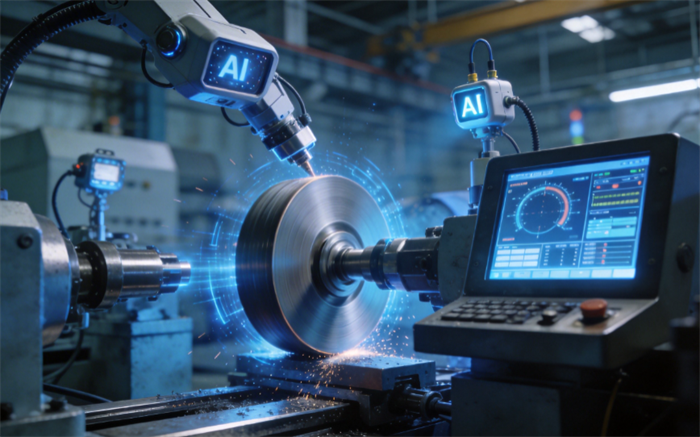
1.1 The Quality Inspection Nightmare: Traditional dressing grinders struggle to meet modern inspection requirements
Customers say manually checking grinding wheels for defects is a nightmare. Tiny cracks and hidden pores go undetected, resulting in scrap parts as soon as they hit the machine. Switching to standard automated equipment requires days of re-calibration for every new model, delaying production.
This is a universal pain point in the traditional precision grinding industry: reliance on manual expertise and rudimentary inspection tools fails to meet modern manufacturing’s exacting demands for micron-level precision.
1.2 The Precision Nightmare: CNC Grinding Services Lacking AI Support Struggle to Pass on Expertise
When seasoned technicians retire, grinding parameters are lost. Novices struggle to set the correct speed and feed rates; for difficult-to-machine materials such as cemented carbide and aerospace blades, substandard surface roughness and dimensional deviations are commonplace, whilst the grinding wheels suffer abnormal wear.
Without intelligent assistance, parameter settings for CNC grinding services rely entirely on the individual experience of the technician. This not only leads to inconsistent machining quality but also exposes enterprises to a crisis of technical knowledge transfer.
1.3 The Nightmare of Waste: Customised grinding solutions without intelligent operation and maintenance incur high costs
The timing of grinding wheel replacement is entirely based on experience. Replacing them too early wastes resources, whilst replacing them too late results in a sharp drop in precision, tool breakage and workpiece damage. A single scrap of a high-end workpiece can result in losses equivalent to dozens of grinding wheels.
Without a data-driven, on-demand wheel replacement mechanism, traditional grinding enterprises face persistently high consumables costs and are unable to achieve precise cost control.
I could only repeatedly emphasise that our grinding wheels are of high quality and offer excellent value for money, but without concrete evidence, customers simply wouldn’t buy it. Watching orders dwindle, I once believed that this industry would inevitably be phased out by the market.
II. AI Empowerment: The Transformation from Traditional Salesperson to Smart Grinding Solutions Specialist
On the day the company introduced its AI-powered grinding wheel solution, I thought it was all just a gimmick: what possible use could artificial intelligence have for a grinding tool? But after accompanying the technical team on a visit to a pilot client, I was completely proven wrong—and I found the key to unlocking the market.
I no longer simply sell grinding wheels; instead, I’ve transformed into an ‘Intelligent Grinding Solutions Specialist’, taking the AI solution to clients, with every word hitting their pain points.
2.1 Using AI Quality Inspection to Allay Clients' Quality Concerns
Previously, when showing samples to clients, they could only feel the surface and examine the appearance; now I demonstrate AI visual quality inspection directly:
A single scan with a high-resolution camera can pinpoint micro-defects as small as 8 pixels
A detection rate of 99.99%, far surpassing traditional manual inspection
Rapid changeover: requiring only a few samples, implementation takes just a few hours
I assured the client: “With this smart grinding wheel system, manual quality control can be reduced by 3–5 staff, missed inspections and misjudgements are completely eliminated, and defective products will never leave the workshop.”
This is precisely what modern precision grinding requires—the deep integration of visual AI technology with traditional grinding processes, achieving a qualitative shift from ‘experience-dependent’ to ‘data-driven’.
2.2 Using AI for parameter tuning to solve customer precision challenges
Addressing the pain point of process debugging for clients, I put it bluntly and practically: ‘No need to rely on the experience of master craftsmen. AI comes with a “super brain”—it scans the workpiece’s material and shape at a glance, automatically matching spindle speed and feed rate. It can autonomously plan grinding paths even for complex, irregularly shaped parts. Digital twin simulation pre-visualises the machining process, ensuring precision is stable at the micrometre level—even novices can do the work of seasoned technicians.’
AI-driven CNC grinding services are changing the game:
Adaptive parameter optimisation: AI analyses machining data in real time and dynamically adjusts grinding parameters
Digital twin simulation: Simulates the machining process in advance, reducing trial-and-error costs
Knowledge consolidation: Transforms technicians’ experience into reusable intelligent algorithms
2.3 AI-powered maintenance helps customers save real money
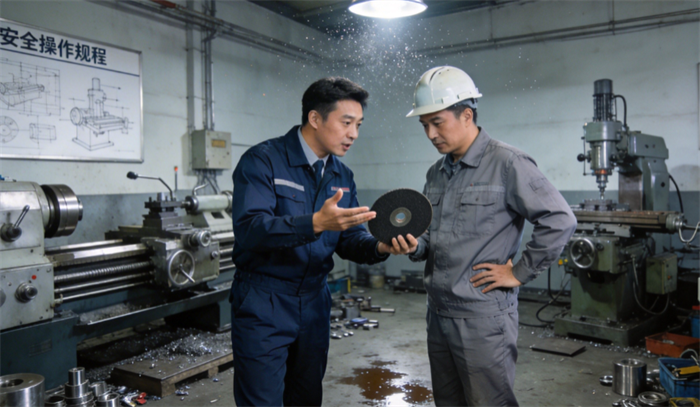
This is what impresses customers the most: smart grinding wheels paired with sensors allow AI to monitor wear, temperature and vibration in real time. The system issues early warnings on when to dress or replace the wheel, enabling ‘on-demand wheel replacement.
The value delivered by AI-driven maintenance:
Consumable costs reduced by 30%
Avoids unexpected downtime and scrapped workpieces
Extends the service life of dressing grinders and equipment
Enables predictive maintenance
Do the maths: the annual savings on maintenance, consumables and scrap costs far exceed the cost of purchasing grinding wheels.
III. From ‘running myself ragged’ to customers coming to us
Taking our AI solution to the market completely transformed my sales approach: I no longer had to pester clients relentlessly; instead, I let real-world case studies and data do the talking, and our conversion rate increased several-fold.
3.1 Case Study: Precision Tool Manufacturer – 30% Increase in PCD Tool Efficiency
When pitching to a precision tool manufacturer, I used data to convince the plant manager: after AI optimised the grinding wheel trajectory, PCD tool life was extended by 30% and efficiency increased by 30%. The plant manager signed a major quarterly contract on the spot.
3.2 Aerospace Components Case Study: The Value of Customised Grinding Solutions
When quoting for an aerospace components manufacturer, I presented a flexible grinding solution where AI adaptively scans deformed blades. With a 99% compliance rate for surface roughness and a 40% reduction in processing time, the client awarded me their entire annual consumables contract.
These high-precision, high-difficulty customised grinding solutions represent the ideal application scenarios for AI technology. Complex geometries and irregular materials that traditional methods struggle to handle become effortless with AI assistance.
3.3 Repeat Purchases from Existing Customers: Intelligence Has Become a Must-Have
Even when existing customers place repeat orders, they specifically request the smart models with AI-assisted maintenance, saying they no longer have to worry about grinding wheel issues.
Whereas I used to have to chase after clients, now they are the ones proactively calling to enquire about AI-powered grinding wheel solutions. My colleagues say I’ve finally ‘seen the light’, but in truth, I’ve simply realised that times have changed: selling grinding wheels is no longer about selling consumables, but about selling intelligence, efficiency and solutions.
IV. Embark on Your Smart Grinding Transformation Journey
If you are facing the challenges of traditional sales models, or are seeking ways to break through performance bottlenecks, why not start with the following approaches:
Learn the basics of AI: Understand the applications of AI in manufacturing, particularly the latest developments in the fields of precision grinding and CNC grinding services
Focus on customer pain points: Gain a deep understanding of customers’ genuine needs regarding quality, efficiency and cost, and consider how AI can provide solutions
Build a portfolio of success stories: Start with small-scale projects to validate the effectiveness of AI grinding solutions, creating replicable success stories
Establish technical partnerships: Collaborate with specialist AI technology providers to offer customers customised grinding solutions
Times are changing, and opportunities are reserved for those who are prepared. Let us join forces to find our own path to success amidst the wave of smart grinding!