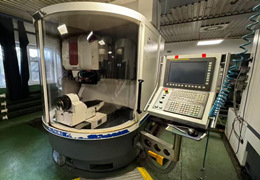
The Business Impact of Precision Grinding Excellence
In today's competitive manufacturing landscape, precision grinding operations directly impact product quality, production efficiency, and profitability. Companies that master precision grinding achieve measurable competitive advantages: tighter tolerances enable superior product performance, optimized processes reduce costs, and consistent quality builds customer trust.
This article presents real-world precision grinding case studies demonstrating how manufacturers across industries transformed their grinding operations to achieve exceptional results. Each case study provides actionable insights that you can apply to your own operations.
Case Study 1: Automotive Precision Parts Manufacturer
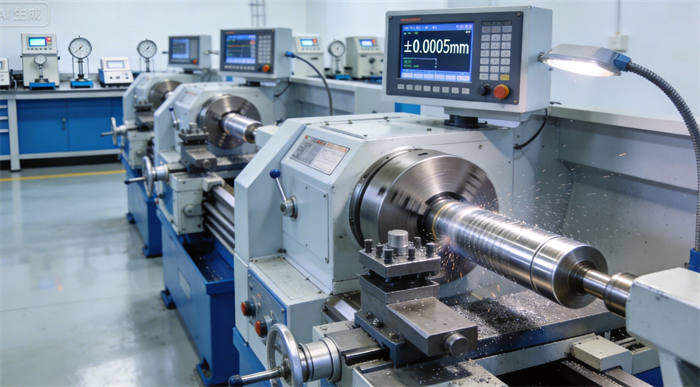
Challenge: Achieving Consistent Sub-Micron Precision
Company Profile:
A leading manufacturer of automotive precision components serving global OEMs, producing shafts, gears, and critical engine parts with annual production exceeding 2 million units.
Initial Situation:
表格
| Metric |
Before Optimization |
| Dimensional tolerance capability |
±0.002mm |
| Surface roughness (Ra) |
0.2-0.4 μm |
| Yield rate |
82% |
| Average cycle time |
120 minutes per batch |
| Customer complaints (annual) |
47 quality-related issues |
Core Problems:
- Inconsistent dimensional accuracy across production runs
- Frequent wheel changes causing production interruptions
- High scrap rates on hard-to-grind materials (hardened steel, alloys)
- Difficulty maintaining tolerances during unattended shifts
Solution Implemented
Phase 1: Grinding Wheel Optimization
- Conducted comprehensive application analysis
- Selected premium ceramic alumina wheels for roughing operations
- Implemented CBN wheels for finishing operations on hardened materials
- Established wheel specification database for different part families
Phase 2: Process Parameter Development
- Developed optimized grinding parameters using design of experiments (DOE)
- Implemented adaptive feed control based on grinding power monitoring
- Established spark-out times for size stabilization
- Created process documentation and standard operating procedures
Phase 3: Machine and Tooling Upgrades
- Installed in-process gauging system for real-time size control
- Upgraded coolant delivery system with high-pressure capability
- Implemented automatic wheel dressing with programmable intervals
- Added temperature compensation for thermal stability
Results Achieved
表格
| Metric |
After Optimization |
Improvement |
| Dimensional tolerance capability |
±0.0005mm |
75% improvement |
| Surface roughness (Ra) |
0.05-0.1 μm |
70% improvement |
| Yield rate |
99.5% |
17.5 percentage points |
| Average cycle time |
70 minutes per batch |
42% reduction |
| Customer complaints (annual) |
3 quality-related issues |
94% reduction |
Financial Impact:
- Annual scrap cost reduction: $340,000
- Labor cost savings from reduced cycle time: $180,000
- Customer retention value: $1.2M in prevented business loss
- Total annual benefit: $1.72M
Key Success Factors:
- Systematic approach to wheel selection and process optimization
- Investment in measurement and control technology
- Comprehensive operator training program
- Continuous monitoring and improvement culture
Expert Support for Your Grinding Optimization
Our application engineering team provides comprehensive grinding optimization services:
- Process Assessment - Complete evaluation of current operations
- Wheel Selection - Optimized specifications for your applications
- Parameter Development - Proven methodology for process optimization
- Training Programs - Operator and engineer skill development
- Technical Support - Ongoing assistance for continuous improvement
Contact us today to discuss how we can help transform your grinding operations into a source of competitive advantage.