NEWS
21
Sep

PCD&PCBN Tool Grinding Machine: Economical Precision for Superhard Tool Production and Resharpening

Share:
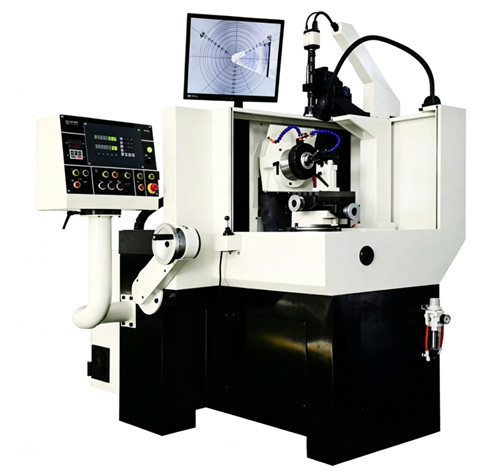
PCD and PCBN cutting tools earn their reputation on the edge: wear resistance, edge sharpness and consistency decide whether a tool line makes money. But that edge is only as good as the machine that creates it — and many tool makers assume that grinding superabrasives demands a machine far beyond their budget. The BT150H was built to disprove that assumption. It is an economical, purpose-designed tool grinding machine for manufacturing and resharpening PCD, PCBN and CVD tools, and it also handles non-standard cemented carbide and high-speed steel inserts. Here is a complete look at how it works and why it has become a favorite entry point into superhard tool production.


What Is the BT150H?

The BT150H is a super-hard tool grinder that pairs a rigid one-piece casting bed with a pneumatic feed system. Where most entry-level machines treat feed force as an afterthought, the BT150H makes it the core feature: constant air pressure pushes the tool against the wheel, producing what we call flexible feed and constant-pressure grinding. The result is a stable, repeatable grind that protects brittle superabrasive edges from the impact damage that ruins yield on cheaper machines.
Add a spindle with 0.002 mm end runout, an online CCD measurement system and a servo-driven wheel oscillation, and the machine covers the full workflow: roughing, finishing and in-process inspection without moving the tool to a separate measuring station.


Why Superhard Tools Demand a Different Kind of Grinder

Grinding PCD or PCBN is not ordinary tool grinding. These materials sit at the extreme end of the hardness scale — PCD is a sintered diamond structure, PCBN a cubic boron nitride compact — and both are also brittle at the cutting edge. A rigid, high-force feed that works fine on carbide can micro-chip a superabrasive edge, and the damage often hides until the tool fails in the customer's spindle. Cyclic impact is the worst offender: each time the wheel bites in and out, the edge takes a small shock.
That is exactly the failure mode the BT150H's pneumatic system is engineered to remove. By feeding with air pressure instead of a hard screw drive, the machine behaves less like a press and more like a skilled hand: constant force, with enough give to absorb the shock. For tool makers moving from carbide into superabrasives, this single design decision usually explains the yield difference between a good batch and a scrap batch.


Seven Machine Features That Matter in Daily Production

1. One-Piece Casting Bed

The machine base is a high-quality one-piece casting, and the major components weigh up to one ton. Mass is the cheapest form of vibration damping: the bed absorbs grinding forces so the edge being cut stays calm, satisfying the rigidity requirements of all superhard material grinding.

2. High-Precision Motor Spindle

The grinding head uses a variable-frequency motor spindle with circulating water cooling for thermal stability. Rotation accuracy is 0.002 mm end runout and 0.003 mm radial runout — the foundation of every edge the machine produces.

3. Constant-Pressure Pneumatic Feed

During grinding, the tool is held under constant air pressure rather than a rigid mechanical feed. The process stays balanced and stable, overall grinding efficiency rises, and the pneumatic system doubles as a shock absorber when the edge meets resistance.

4. Fast Approach and Retract

The same pneumatic feed drives rapid forward approach to the wheel and fast retraction back to the clamping position after grinding. Auxiliary time — the non-cutting time that quietly kills throughput — drops by up to 70%.

5. Servo-Driven Wheel Oscillation

A servo motor reciprocates the wheel with an adjustable stroke from 0 to 30 mm. Oscillation spreads wear evenly across the wheel face and keeps the abrasive self-sharpening, which protects both grinding accuracy and surface roughness over long runs.

6. Online CCD Measurement

A variable-magnification optical microscope with a CCD camera provides 1x to 4x optical magnification. Software-generated reference reticles are calibrated once and kept as a fixed benchmark, so the machine can measure tool nose radius precisely. Angle-line and graphic import functions support comparison measurement of non-standard cutting tools.

7. Radial Locking of the Wheel Spindle

Radial locking technology clamps the two concave-convex circular guideways together for gap-free, smooth contact, greatly enhancing rigidity. A subtle but valuable detail: adjusting the wheel elevation angle — which sets the tool clearance angle — does not move the wheel centerline, so no wheel height adjustment is needed between rough and finish grinding.


Three Technical Breakthroughs Worth a Closer Look

Optimized Vertical Axis

Fine-adjustment vertical lifting is integrated directly into the work-table fixture instead of floating on a tall column. The lower the adjustment sits relative to the grinding point, the stiffer the whole stack becomes — a small structural decision with a measurable payoff in stability. (Optional 8S000G configuration.)

Flexible Feed That Protects Brittle Edges

PCD is hard but brittle; it cannot tolerate impact, especially cyclic impact. The air-pressure flexible feed gives way momentarily when the cutting edge meets a shock, instead of forcing through. Operators see the difference in edge surface roughness — fewer micro-chips, more saleable tools.

Large-Screen Image Display

The tool image is displayed on a large screen positioned directly in front of the operator station. No twisting the neck to check a side monitor, no craning to see the wheel — just look up. It sounds minor until you run an eight-hour shift: the ergonomic layout raises effective production efficiency by approximately 50%.

Main Technical Specifications

 
Item Specification
Wheel diameter 150 mm
Wheel bore 40 mm
Spindle power 3 kW
Effective grinding speed range 1,000 - 4,000 rpm
Servo oscillation frequency 0 - 60 times/min
Wheel travel (X axis) 300 mm
Wheel angle range (vertical plane) -5° to 25°, adjustable via control panel
Optical microscope magnification 0.7 - 4.5x
Max. imaging system magnification Approx. 70x
Coolant tank volume (with filter paper) Approx. 70 L
Overall dimensions (without integrated cooling unit) 1890 x 1650 x 1980 mm
Total weight (including coolant tank) 2000 kg
Main power rating 12 kW
Power supply 380 V / 3-phase / 50 Hz
Note: Technical specifications are subject to change per the technical contract.


The Economics of Superhard Tool Grinding

Superabrasive tools carry a premium price because they carry a premium cost — the PCD or PCBN blank, the precision blank preparation, and the skilled grinding time. Every scrapped edge and every slow cycle eats directly into margin. That is why the BT150H's design priorities line up so neatly with profitability.
The constant-pressure pneumatic feed reduces edge chipping, which lowers scrap on expensive blanks. The fast approach-and-retract cycle cuts up to 70% of auxiliary time, so each tool spends more of its cycle actually cutting. The online CCD measurement catches a drifting dimension before the tool leaves the fixture, so a bad tool is corrected rather than shipped and returned. Taken together, these features do not just make grinding easier — they make the difference between a tool-grinding operation that pays and one that quietly leaks margin.
For resharpening businesses the math is even clearer. A tool returned for resharpening is a tool the customer already owns, so the value you add is pure service margin. A machine that can resharpen quickly, accurately and repeatably turns every return visit into recurring revenue — and the BT150H was engineered to be exactly that kind of machine at an economical price point.


Industries That Put the BT150H to Work

  • Woodworking tooling: PCD profile cutters, saw blades and router bits that demand clean, chip-free edges
  • Aluminum and composite machining: aerospace, automotive and electronics housings cut with PCD
  • Ferrous finishing: PCBN inserts for hardened steel turning and boring in automotive and bearing plants
  • General engineering: non-standard carbide and HSS form tools produced in small batches
  • Tool resharpening services: restoring used PCD and PCBN tools to original geometry
Because the BT150H spans PCD, PCBN, CVD, cemented carbide and high-speed steel on a single platform, one machine can serve a mixed customer base. That flexibility is often the deciding factor for shops that cannot predict next quarter's tool mix.


Who Is the BT150H For?

  • Tool makers entering PCD/PCBN production who need professional capability without a flagship-machine budget
  • Resharpening shops servicing woodworking, aluminum and composite cutting tools
  • Factories producing non-standard cemented carbide and HSS inserts in small batches
  • Any operation where edge quality must be verified in-process, not on a separate CMM
Because the machine handles both manufacturing and resharpening, it also suits businesses that want to sell tool service alongside new tools — one asset, two revenue streams.


Why Choose More Superhard

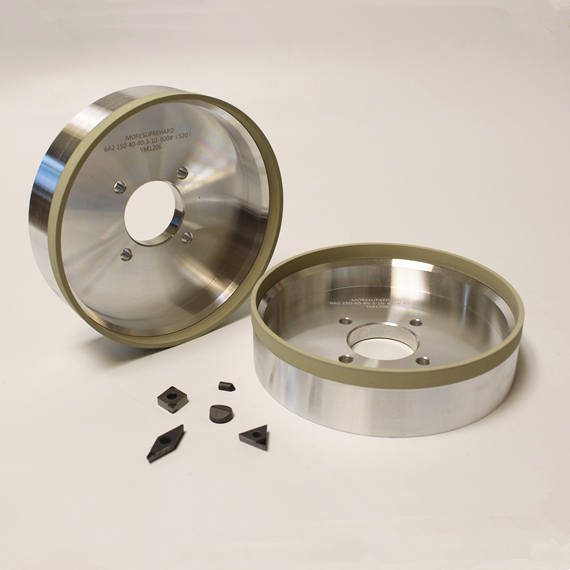
More Superhard (Mo'ao Superhard) is a China-based manufacturer and exporter of superabrasive tools and the machines that use them. We do not just ship the BT150H: we supply the matching diamond and CBN wheels, application parameters and after-sales support from one team that understands both sides of the grinding contact. If you are comparing quotations, ask every supplier one question — who supports the machine and the wheel together? That is where More Superhard wins.


Frequently Asked Questions

What tools can the BT150H grind?
PCD, PCBN and CVD cutting tools for manufacture and resharpening, plus non-standard cemented carbide and high-speed steel inserts.
How accurate is the spindle?
End runout is 0.002 mm and radial runout 0.003 mm, with variable-frequency speed control and water cooling for thermal stability.
Does it measure the tool while grinding?
Yes. The online CCD system with 1x-4x optical magnification (up to ~70x on screen) measures tool nose radius and supports comparison measurement of non-standard tools.
What power supply is required?
380 V, 3-phase, 50 Hz, with a 12 kW main power rating. Other voltages can be discussed for export orders.


Get a BT150H Quotation

Ready to bring superhard tool grinding in-house? Send More Superhard your tool drawings or resharpening volume, and we will recommend the BT150H configuration, wheel package and lead time for your market.
 
Copyright © 2003-2023 More SuperHard Products Co., Ltd
Home
Whatsapp
E-mail
Inquiry