NEWS
14
Sep

Why Use a Diamond Dressing Pen to Dress Grinding Wheels: The Complete Guide

Share:

The Problem: Every Grinding Wheel Dulls Eventually


During grinding, every grinding wheel gradually loses its cutting edge. Abrasive grains become dull and flattened, and the wheel surface becomes loaded with workpiece chips trapped in its pores. The results are predictable: grinding forces rise, surface finish degrades, heat builds up, and workpiece quality suffers. To restore a grinding wheel's cutting ability, the wheel must be dressed. Among all dressing tools available, the diamond dressing pen—also called a diamond dresser or single-point diamond tool—is the most widely used in machine shops around the world. But why the diamond pen, and not another tool? The answer comes down to one word: hardness—and the precision that hardness makes possible.

Hardness Advantage: Only Diamond Can "Bite" a Grinding Wheel


A grinding wheel is itself made of abrasive grains held together by a bond. Common abrasive materials include white fused alumina, chrome corundum, silicon carbide, and brown fused alumina—all of which are already extremely hard. Trying to dress such a wheel with an ordinary tool is like attacking stone with softer stone: ineffective and wasteful.
Diamond is the hardest known natural material. The working tip of a diamond dressing pen is a natural or synthetic diamond crystal whose hardness far exceeds that of conventional abrasives. This means that during dressing, the diamond pen cleanly cuts away the dulled abrasive layer from the wheel surface, rather than being worn down by the wheel itself. By comparison, tools such as dressing sticks (oil stones) can remove surface loading and restore some sharpness, but because their hardness equals or falls below that of the wheel's abrasive, the process behaves more like "grinding against grinding"—slow, inefficient, and hard on the tool.

More Than Hardness: Truing Accuracy and Surface Profile Control


If hardness were the only advantage, the diamond pen would still be replaceable. What truly makes it irreplaceable is its ability to precisely control the geometric shape and surface topography of the wheel. Wheel dressing serves two distinct purposes:
  1. Truing: Restoring the wheel's geometric accuracy so it keeps the correct shape, angle, and concentricity.
  2. Sharpening (conditioning): Removing bond material between abrasive grains so that fresh, sharp cutting edges protrude from the surface.
Because the tip of a diamond dressing pen is a single, highly regular diamond crystal—or a few carefully oriented crystals—it can perform micron-level cuts on the wheel during dressing. Natural diamond crystals feature an exceptionally regular structure, and their cutting edges are inherently sharp at the micron scale while wearing at an extremely low rate. Wheels dressed with a diamond pen show minimal profile error and excellent surface consistency. Ordinary dressing tools, in contrast, can usually achieve only "sharpening"—they struggle with the geometric truing that precision grinding demands.

Diamond Pen vs. Diamond Roller: Positioning and Trade-Offs


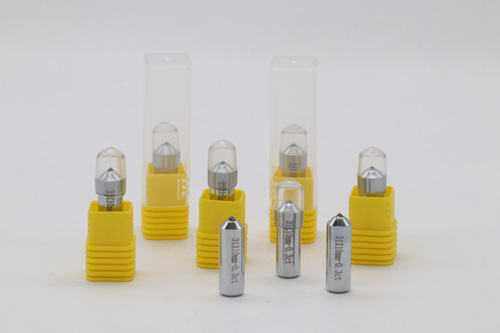
                            dressing pen

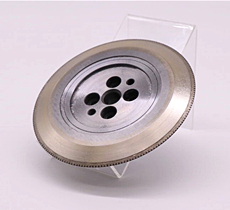
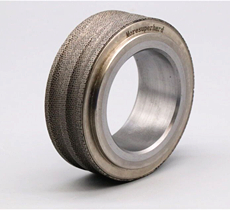
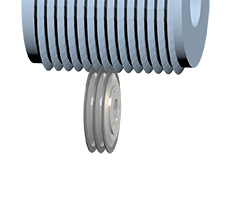
                            Diamond Dressing wheel


Diamond dressing tools come in more than one form. The diamond dressing roller (rotary dresser) is another popular choice, with major advantages in high-volume, high-precision production. A diamond roller's profile and dimensions are custom-engineered from the workpiece drawing, so a single dressing pass "copies" the entire shape onto the wheel. This delivers exceptional productivity and repeatability, and it reduces dependence on operator skill.
However, diamond rollers cost significantly more and have long manufacturing lead times. They are best suited to fixed-profile, mass-production runs. The diamond dressing pen, by contrast, is simple, versatile, and universally applicable. It is the natural choice for single-piece and small-batch grinding, or for operations where the wheel shape changes frequently. For the average grinding machine operator, a diamond dressing pen is the most direct and economical tool available.

Applications and Limitations of Diamond Dressing Pens


Diamond dressing pens are primarily intended for dressing conventional abrasive wheels—including white fused alumina, chrome corundum, silicon carbide, and brown fused alumina wheels with vitrified (ceramic) or resin bonds. Their use is more limited on superabrasive wheels (diamond wheels and CBN wheels). When a diamond tool is used to dress a diamond wheel, the two materials have similar hardness, so both the dressing tool and the wheel suffer significant wear, and the results are unsatisfactory. For superabrasive wheels, dedicated dressing methods (such as rotary diamond dressers) are required.
The dressing efficiency of a diamond pen is also lower than that of a diamond roller, which can become a bottleneck in very large batch production. But for the majority of conventional grinding applications, the slight loss of efficiency is a fair trade for flexibility and low cost—a trade most shops happily make.

Summary: Why the Diamond Dressing Pen Wins


The fundamental reason to choose a diamond dressing pen is that the hardness of the wheel's abrasive demands a harder dressing tool—and diamond is the only material that balances hardness and cost effectively. Even more importantly, the diamond pen does not simply "rub off" the wheel surface; it precisely controls the wheel's geometry and surface topography, something ordinary tools cannot do. For grinding operations that demand accuracy and stability, the diamond dressing pen provides a reliable, controllable, and cost-effective solution. For operators who dress conventional abrasive wheels on a daily basis, it remains the industry standard—and the smartest first choice.

Why Choose Our Diamond Dressing Pens


We manufacture professional-grade diamond dressing pens using premium natural and synthetic diamonds mounted in precision-ground steel shanks. Every pen is inspected for diamond quality, crystal orientation, and tip geometry before shipment. We offer a full range of sizes and configurations—from single-point pens for general-purpose dressing to multi-point and blade-type tools for specialized applications—as well as custom options to match your specific grinding machines and wheel types. Our application engineers help you choose the right dresser, set correct dressing parameters, and get the most from every wheel. Contact us today for a customized diamond dressing solution and technical consultation.

Frequently Asked Questions


Q: What is a diamond dressing pen used for?
A: A diamond dressing pen is used to dress conventional abrasive grinding wheels—removing dulled grains and loading, restoring the wheel's geometric shape (truing), and exposing fresh sharp cutting edges (sharpening). It is the most widely used dressing tool in general machine shops.
Q: Why is diamond the best material for dressing grinding wheels?
A: Diamond is the hardest known material, far harder than the abrasive grains (alumina, silicon carbide) that make up conventional wheels. This lets the diamond tip cut away the dulled abrasive layer cleanly instead of being worn down itself, and its regular crystal structure enables micron-level control of wheel geometry and surface profile.
Q: What is the difference between truing and sharpening a grinding wheel?
A: Truing restores the wheel's geometric shape, angle, and concentricity so it runs true. Sharpening (conditioning) removes bond material so that fresh abrasive grains protrude with sharp cutting edges. A diamond dressing pen performs both functions in one operation.
Q: Can I use a diamond dressing pen on CBN or diamond wheels?
A: Generally, no. Single-point diamond pens are intended for conventional abrasive wheels (white fused alumina, chrome corundum, silicon carbide, brown fused alumina). On superabrasive CBN or diamond wheels, tool and wheel have similar hardness, causing excessive wear on both. Use a rotary diamond dresser or other dedicated method for superabrasive wheels.
Q: How does a diamond dressing pen compare to a diamond roller?
A: A diamond roller is custom-engineered to reproduce a fixed wheel profile in high-volume production with excellent repeatability, but it is expensive with long lead times. A diamond pen is simple, versatile, and economical—ideal for single-piece, small-batch, or frequently changing shapes. Efficiency is lower, but for most conventional grinding, the pen offers the best cost-benefit.
Q: How long does a diamond dressing pen last?
A: Service life depends on wheel type, dressing frequency, depth of cut, and care. A quality single-point pen can last from several months to well over a year in moderate use. Rotating the diamond periodically to expose fresh cutting edges, using proper depth and feed, and avoiding impacts all extend tool life.
 
FOLLOW US
This Blog keeps our valued customers informed of important Radiac News and Events, and in the industries we serve.
Copyright © 2003-2023 More SuperHard Products Co., Ltd
Home
Whatsapp
E-mail
Inquiry