NEWS
29
Aug

Vitrified CBN Grinding Wheel Production Process: A Complete Manufacturing Guide

Share:

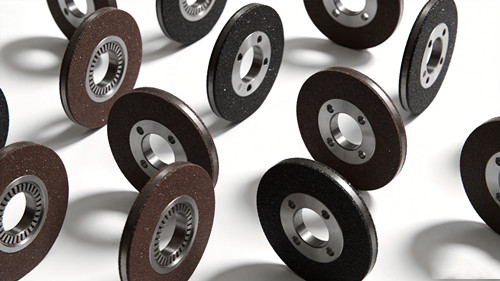
Ceramic-bonded CBN (cubic boron nitride) grinding wheels represent one of the most advanced abrasive technologies available today. Combining the exceptional hardness and thermal stability of CBN abrasives with the strong bonding and heat resistance of vitrified ceramic matrices, these wheels deliver outstanding performance in high-precision grinding of hardened steels, cast irons, and superalloys.


                             Ceramic CBN Grinding Wheel

However, manufacturing ceramic CBN grinding wheels is a complex, multi-step process where each stage critically influences the final product quality. Understanding this production process is essential for both manufacturers seeking to optimize their operations and end users who need to specify the right wheel for their application.

This article provides a comprehensive overview of the ceramic CBN grinding wheel production process, covering raw material selection, mixing, forming, sintering, finishing, and quality control.

The Six Core Production Steps


The production of ceramic CBN grinding wheels follows a carefully controlled six-step process: raw material preparation and mixing, press forming, drying and binder removal, high-temperature sintering, precision finishing, and inspection and grading.
Each step requires specific expertise, equipment, and process controls to ensure the final wheel meets stringent performance specifications. Let us examine each stage in detail.

Step 1: Raw Material Preparation and Mixing


The foundation of every ceramic CBN wheel lies in its raw materials. The primary components include CBN abrasive grains, low-melting-point ceramic frit as the bonding agent, and functional fillers that modify wheel properties such as porosity, strength, and thermal conductivity.
CBN grain selection is critical. Manufacturers prioritize uniform grain size distribution and high purity to ensure consistent cutting performance. To optimize cost-effectiveness, many producers blend different CBN grain grades, combining premium grains for cutting edges with secondary grades for structural support.
The ceramic bonding agent — typically a proprietary blend of glass frits, clays, and flux materials — must be precisely proportioned and thoroughly dried before mixing. Any moisture absorption or clumping in the bond material will cause compositional inconsistencies in the green body, leading to defects such as porosity variations, weak spots, or dimensional instability after sintering.
Mixing is performed at low speeds to ensure uniform distribution without damaging the CBN grains or causing bond agent segregation. Over-aggressive mixing can fracture CBN particles or create agglomerates that compromise wheel homogeneity.
 

Step 2: Press Forming


Cold pressing is the standard forming method for ceramic CBN grinding wheels. The mixed powder is loaded into precision molds and compressed under carefully controlled pressure to produce a dense, uniform green body.
Mold preparation is essential for defect-free forming. Molds must be clean, flat, and uniformly coated with release agent. Uneven release agent application can cause sticking, surface defects, or density variations in the pressed body.
The pressing cycle itself demands stable, uniform pressure with adequate hold time. Pressure gradients within the mold cavity create density variations that translate into uneven sintering behavior and dimensional distortion. Green bodies must be handled with extreme care after pressing — any impact, vibration, or uneven support can introduce cracks or deformation that only become apparent after sintering.

Step 3: Drying and Binder Removal


After forming, the green bodies contain residual moisture and organic binders that must be carefully removed before sintering. Low-temperature drying eliminates free water, while a controlled binder burnout cycle decomposes and removes organic additives.
This step requires careful temperature ramp control. Heating too rapidly can cause steam pressure buildup inside the green body, leading to internal cracking or delamination. The drying and burnout schedule must be matched to the specific binder system and wheel geometry.

Step 4: High-Temperature Sintering — The Critical Stage


Sintering is the most critical and defect-prone step in the entire production process. During sintering, the ceramic bond material melts and flows around the CBN grains, forming a strong glass-phase matrix that firmly anchors the abrasive particles.
The sintering temperature window for ceramic CBN wheels is extremely narrow. Temperature too high causes the bond to over-soften, leading to wheel deformation, grain damage, and excessive vitrification. Temperature too low results in incomplete bond sintering, insufficient grain retention, and premature grain pullout during use — manifesting as accelerated wear and poor grinding performance.
Precise control of heating rate, peak temperature, soak time, and cooling schedule is essential. Modern kilns with programmable controllers and uniform temperature distribution zones are critical equipment investments for consistent production quality.
Cooling must follow the furnace schedule — wheels are cooled slowly inside the kiln to prevent thermal shock. Rapid cooling or forced air quenching creates enormous internal stresses that can crack the entire wheel or cause edge chipping. This is one of the most common production errors and represents a significant source of yield loss.

Step 5: Precision Finishing


After sintering, the wheels undergo precision finishing operations to achieve final dimensional tolerances and surface quality. This includes precision grinding of the working face, bore sizing, edge chamfering, and balance testing.
Sintered ceramic CBN wheels are inherently brittle and extremely hard. Finishing operations must use small infeed depths and low grinding speeds. Aggressive machining or impact forces can cause edge chipping, microcracks, or catastrophic wheel fracture. Patience and precision in finishing directly determine the wheel performance in the customer application.

Step 6: Inspection and Quality Assurance


Final inspection encompasses dimensional verification, visual defect examination, hardness testing, balance testing, and in some cases, performance testing on representative workpieces. Wheels must meet strict specifications for bore diameter, face flatness, thickness tolerance, and maximum allowable imbalance.
Advanced manufacturers employ statistical process control throughout production, tracking key parameters at each stage to identify trends before they produce out-of-specification wheels. This proactive approach significantly reduces scrap rates and ensures consistent batch-to-batch quality.

Best Practices for Wheel Users


Understanding the production process also helps end users get the most from their ceramic CBN wheels. Several operational guidelines follow directly from the manufacturing science:
Never exceed the rated operating speed — overspeed operation places centrifugal stresses on a wheel that was engineered for a specific mechanical envelope. Always use compatible coolant formulations and ensure adequate flow to prevent thermal damage to the ceramic bond.
Regular wheel dressing with appropriate diamond dressers maintains cutting efficiency and surface finish quality. The dressing parameters should be matched to the specific wheel specification and application requirements.
Store wheels in a dry, temperature-stable environment. Ceramic bonds are resistant to most environmental factors, but prolonged exposure to moisture or thermal cycling can affect performance over extended storage periods.

Conclusion


Manufacturing ceramic CBN grinding wheels demands mastery of materials science, thermal engineering, and precision machining. Every step — from raw material selection through final inspection — must be executed with rigor and consistency to produce wheels that deliver the performance, reliability, and cost-effectiveness that modern grinding operations require.
MoreSuperHard applies decades of superabrasive expertise to every ceramic CBN wheel we produce. Our controlled production processes and rigorous quality standards ensure that each wheel delivers consistent grinding performance, long service life, and the surface finish quality your applications demand.

Get in Touch


Looking for high-performance ceramic CBN grinding wheels?
Contact MoreSuperHard today for customized solutions tailored to your specific grinding and machining needs.
FOLLOW US
This Blog keeps our valued customers informed of important Radiac News and Events, and in the industries we serve.
Copyright © 2003-2023 More SuperHard Products Co., Ltd
Home
Whatsapp
E-mail
Inquiry