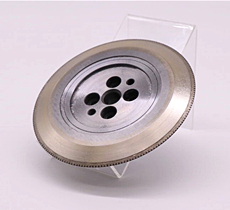
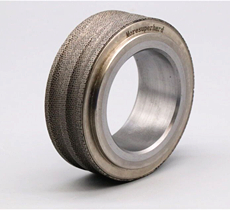
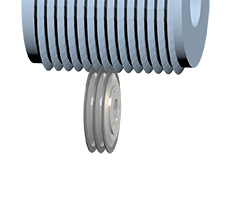
In precision metalworking and tool grinding applications, high-speed steel (HSS) drills and cobalt high-speed steel (HSS-Co) drills represent essential cutting tools across diverse industries. These drills are widely valued for their excellent red hardness, wear resistance, and ability to maintain cutting performance at elevated temperatures—characteristics that make them indispensable in manufacturing operations ranging from general machining to aerospace component production.
However, the superior performance of HSS and cobalt drills can only be maintained through precision grinding and sharpening. Whether performing flute grinding, edge sharpening, chisel edge conditioning, or complete drill regrinding operations, the selection of appropriate grinding wheels becomes absolutely critical. Choosing the wrong grinding wheel leads to:
- Suboptimal grinding efficiency and extended processing times
- Workpiece burning and thermal damage to drill edges
- Premature drill failure and reduced tool life
- Inconsistent quality across sharpened tools
- Inability to complete grinding operations successfully
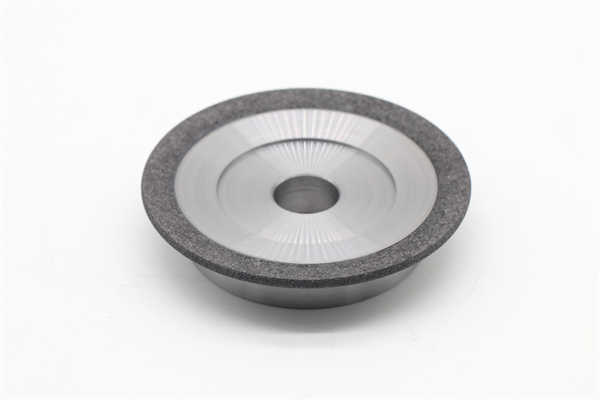
This comprehensive technical guide provides systematic recommendations for grinding wheel selection when processing HSS and cobalt drills, including specific wheel specifications, parameter optimization, and industry best practices that manufacturers can implement immediately to improve drill sharpening operations.
Fundamental Selection Principles: The Foundation of Success
The Iron Rule: Never Use Diamond Wheels for Ferrous Metals
Before discussing specific wheel recommendations, manufacturers must understand the fundamental principle that governs grinding wheel selection for HSS and cobalt steel:
Critical Warning: Diamond wheels should NEVER be used for grinding ferrous metals.
This prohibition is based on chemical principles:
- Diamond (carbon) reacts chemically with iron and iron-based alloys at elevated temperatures
- The chemical reaction causes rapid wheel wear and destruction of the diamond abrasive
- Results in extremely short wheel life and ineffective grinding performance
- Creates safety hazards due to potential wheel degradation
The Correct Solution: For grinding HSS and cobalt drills, manufacturers must select either:
- Aluminum oxide-based wheels (WA, PA, SA)
- Cubic Boron Nitride (CBN) wheels
The Three Critical Factors in Wheel Selection
When selecting grinding wheels for drill sharpening applications, three primary factors determine the optimal specification:
| Factor |
Impact on Selection |
Key Considerations |
| Drill material |
Determines abrasive type |
HSS vs. HSS-Co vs. tungsten carbide |
| Precision requirements |
Influences grit size and bond |
General sharpening vs. high-precision regrinding |
| Production efficiency |
Affects wheel specifications |
Small batch vs. high-volume production |
Understanding these factors enables manufacturers to make informed decisions that balance performance, quality, and cost-effectiveness.
Part 1: Grinding Wheels for Standard High-Speed Steel (HSS) Drills
Understanding Standard HSS Drill Characteristics
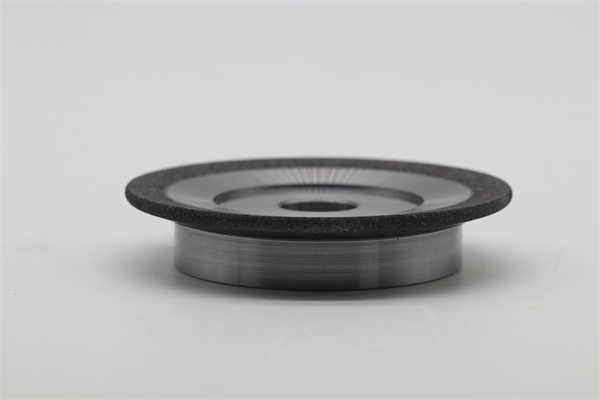
Standard HSS drills (such as M2, M7, or grade 6542, 9341) represent the workhorse cutting tools in general machining applications:
| Characteristic |
Typical Value |
Grinding Implication |
| Hardness |
HRC 62-65 |
Moderate grinding difficulty |
| Composition |
Tungsten, chromium, vanadium |
Standard aluminum oxide wheels effective |
| Thermal conductivity |
Moderate |
Heat generation manageable with proper coolant |
| Abrasion resistance |
Good but not exceptional |
Standard grinding wheel wear acceptable |
Standard HSS drills offer relatively forgiving grinding characteristics, making them suitable for a wide range of grinding wheel types with appropriate parameter selection.
Primary Recommendation: White Aluminum Oxide (WA) Wheels
Why White Aluminum Oxide?
White aluminum oxide (WA) represents the optimal balance of performance and cost-effectiveness for standard HSS drill sharpening:
Key Characteristics:
| Property |
Value |
Grinding Benefit |
| Purity |
99%+ Al₂O₃ |
Consistent, sharp cutting action |
| Friability |
High |
Self-sharpening characteristics |
| Thermal conductivity |
Moderate |
Heat generation manageable |
| Cost-effectiveness |
High |
Low wheel cost, reasonable life |
Advantages for HSS Drill Sharpening:
✅ Self-sharpening properties maintain cutting efficiency
✅ Low heat generation minimizes risk of workpiece burning
✅ Excellent surface finish on sharpened edges
✅ Cost-effective solution for general applications
✅ Widely available from multiple suppliers
Optimal Specifications for WA Wheels:
| Parameter |
Rough Grinding |
Finish Sharpening |
| Grit size |
46#-60# |
80#-120# |
| Grade (hardness) |
K-L (medium-soft) |
K-L (medium-soft) |
| Bond type |
Vitrified (V) |
Vitrified (V) |
| Structure |
7-9 (standard) |
7-9 (standard) |
Application Scenarios:
- Manual drill sharpening on bench grinders or drill sharpeners
- General cutting tool maintenance and reconditioning
- Small to medium batch production of drill sharpening
- Workshop and job shop operations with varied drill types
- Educational and training environments
Alternative Selection: Pink/Red Aluminum Oxide (PA) Wheels
When to Consider Chrome Aluminum Oxide (PA):
Pink/red aluminum oxide (PA) offers enhanced characteristics for specific applications:
Compared to White Aluminum Oxide (WA):
| Characteristic |
WA (White) |
PA (Pink/Red) |
Implication |
| Toughness |
Standard |
15-25% higher |
Better for heavier cuts |
| Self-sharpening |
Excellent |
Very good |
Slightly less sharp but more durable |
| Thermal conductivity |
Standard |
Similar |
Comparable heat generation |
| Cost |
Standard |
10-20% higher |
Moderate cost increase |
Best Applications for PA Wheels:
- Larger diameter drills (>10mm) requiring more aggressive stock removal
- Operations with higher feed rates where wheel durability is critical
- Applications requiring slightly faster material removal
- Drill manufacturers producing larger quantities of sharpened tools
Recommended Specifications:
| Parameter |
Value |
| Grit size |
46#-80# (application dependent) |
| Grade |
L-M (slightly harder for durability) |
| Bond |
Vitrified (V) |
| Structure |
6-8 (slightly denser) |
Part 2: Grinding Wheels for Cobalt High-Speed Steel (HSS-Co) Drills
Understanding Cobalt HSS Drill Characteristics
Cobalt high-speed steel drills (such as M35 containing 5% cobalt, M42 containing 8% cobalt) represent significantly more challenging materials for grinding:
| Characteristic |
M35 (5% Co) |
M42 (8% Co) |
Grinding Challenge |
| Hardness |
HRC 65-67 |
HRC 67-70 |
High wear on grinding wheels |
| Red hardness |
Excellent |
Exceptional |
Maintains hardness at high temperature |
| Toughness |
High |
Very High |
Chip formation difficulty |
| Wear resistance |
High |
Very High |
Rapid wheel dulling |
| Thermal sensitivity |
Moderate |
High |
Risk of workpiece burning |
The Fundamental Problem with Conventional Wheels:
When grinding cobalt HSS with standard aluminum oxide wheels:
- Rapid wheel dulling due to high workpiece hardness
- Excessive heat generation causing workpiece burning (annealing)
- Frequent wheel dressing required to maintain sharpness
- Extended grinding times due to low material removal rates
- High wheel consumption increasing operational costs
Critical Risk: Improper grinding of cobalt HSS can cause:
- Workpiece annealing (loss of hardness at cutting edge)
- Microcracks in the sharpened edge leading to premature drill failure
- Inconsistent tool performance across sharpened drills
- Reduced drill life and poor hole quality
Primary Recommendation: Cubic Boron Nitride (CBN) Wheels
Why CBN is the Industry Standard for Cobalt HSS Grinding:
Material Properties:
| Property |
CBN |
Diamond |
Aluminum Oxide |
| Hardness (Knoop) |
4,700 |
7,000-10,000 |
2,100 |
| Thermal stability |
1,400°C |
700-800°C |
2,000°C |
| Chemical stability with Fe |
Excellent |
Poor (reacts) |
Excellent |
| Thermal conductivity |
13 W/m·K |
2,000 W/m·K |
30 W/m·K |
Key Advantages for Cobalt HSS Drill Sharpening:
✅ Exceptional hardness approaching diamond, far exceeding aluminum oxide
✅ Excellent thermal stability maintaining performance at high temperatures
✅ Chemical inertness with ferrous metals—no chemical reaction
✅ 3-5× higher grinding efficiency compared to aluminum oxide
✅ 50-100× longer wheel life in cobalt HSS applications
✅ Minimal heat generation reducing risk of workpiece burning
✅ Consistent performance throughout wheel life
CBN Wheel Bond Types: Resin vs. Vitrified
Resin-Bonded CBN Wheels:
| Characteristic |
Value |
Application Fit |
| Self-sharpening |
Excellent |
Maintains sharp edges consistently |
| Surface finish |
Superior |
Excellent for final sharpening |
| Coolant compatibility |
Wide range |
Works with most coolant types |
| Wheel wear |
Slightly higher |
Shorter life than vitrified |
| Cost |
Moderate |
Reasonable initial investment |
Best Applications:
- Precision finishing of drill edges
- Small to medium batch production
- Applications requiring excellent surface finish
- Manual or semi-automated drill sharpening
Recommended Specifications:
| Parameter |
Rough Grinding |
Finish Sharpening |
| Grit size |
100#-140# |
170#-230# |
| Concentration |
C100 (standard) |
C100 (standard) |
| Bond |
Resin (B) |
Resin (B) |
Vitrified-Bonded CBN Wheels:
| Characteristic |
Value |
Application Fit |
| Thermal conductivity |
Excellent |
Superior heat dissipation |
| Form holding |
Exceptional |
Maintains wheel geometry precisely |
| Wheel life |
Very long |
50-100× longer than aluminum oxide |
| Dressability |
Good |
Can be dressed as needed |
| Cost |
Higher initial investment |
Offset by extended life |
Best Applications:
- High-volume CNC drill grinding operations
- Form grinding of drill flutes and helical profiles
- Applications requiring precise form holding
- Automated production environments
- Drill manufacturing requiring consistency
Recommended Specifications:
| Parameter |
Rough Grinding |
Finish Sharpening |
| Grit size |
100#-140# |
170#-230# |
| Concentration |
C100-C200 |
C100-C200 |
| Bond |
Vitrified (V) |
Vitrified (V) |
| Structure |
12-16 (open) |
12-16 (open) |
Grit Size Selection for CBN Wheels
Comprehensive Grit Size Guide:
| Application |
Recommended Grit |
Surface Finish (Ra) |
Material Removal Rate |
| Heavy stock removal |
100#-120# |
0.8-1.2 μm |
High |
| Rough grinding/flutes |
120#-140# |
0.6-1.0 μm |
Medium-High |
| Standard sharpening |
140#-170# |
0.4-0.8 μm |
Medium |
| Precision finishing |
170#-230# |
0.2-0.4 μm |
Low-Medium |
| Super-finishing |
270#-400# |
0.1-0.2 μm |
Low |
Practical Grit Selection Example:
For M42 cobalt drill sharpening:
- Step 1 (Rough): 120# CBN, remove 0.1-0.15mm
- Step 2 (Finish): 180# CBN, remove 0.03-0.05mm
- Step 3 (Super-finish, if required): 270# CBN, remove 0.01-0.02mm
Economic Alternatives: When CBN Is Not Feasible
For Budget-Conscious Applications:
When CBN wheels represent too high an initial investment, manufacturers can consider:
Pink Aluminum Oxide (PA) or Single-Crystal Aluminum Oxide (SA):
| Condition |
Viability |
| Manual sharpening |
Acceptable with proper technique |
| Limited equipment capabilities |
Possible with parameter optimization |
| Very small drill quantities |
Economically justified |
| Low-volume production |
May be cost-effective |
Critical Implementation Requirements:
If using aluminum oxide wheels for cobalt HSS:
| Requirement |
Implementation |
| Light cutting depth |
0.002-0.005 mm maximum |
| Frequent wheel dressing |
Dress before each critical operation |
| Adequate coolant |
High flow, proper application |
| Reduced feed rates |
50-70% of standard HSS parameters |
| Increased spark-out |
Allow for thermal stabilization |
Warning: Attempting to grind cobalt HSS with aluminum oxide wheels using aggressive parameters will result in rapid wheel wear, excessive heat generation, and workpiece burning.
Part 3: Grinding Parameter Optimization
Parameter Guidelines for Different Drill Materials
Standard HSS Drills (M2, M7):
| Parameter |
Recommended Range |
Rationale |
| Wheel speed |
25-30 m/s |
Standard for aluminum oxide wheels |
| Work speed |
15-25 m/min |
Balanced with wheel speed for thermal control |
| Infeed |
0.005-0.015 mm/pass |
Prevents excessive heat generation |
| Coolant |
Water-soluble, 8-10% concentration |
Adequate cooling and lubrication |
Cobalt HSS Drills (M35, M42) with CBN Wheels:
| Parameter |
Recommended Range |
Rationale |
| Wheel speed |
35-50 m/s |
Higher speeds utilize CBN's thermal stability |
| Work speed |
20-30 m/min |
Faster work speed spreads heat |
| Infeed |
0.005-0.02 mm/pass |
CBN maintains sharpness for deeper cuts |
| Coolant |
High-pressure, 3-5 bar |
Penetrates air barrier, provides cooling |
Coolant Requirements for Cobalt HSS Grinding:
| Factor |
Recommendation |
Impact |
| Type |
Synthetic or semi-synthetic |
Consistent performance, long life |
| Concentration |
5-8% |
Proper lubrication and cooling |
| Flow rate |
15-25 L/min per cm wheel width |
Adequate cooling capacity |
| Pressure |
3-5 bar |
Penetrates air barrier around wheel |
| Filtration |
<10 microns |
Prevents recirculating debris |
Dressing Practices for Optimal Performance
Aluminum Oxide Wheel Dressing:
| Parameter |
Recommendation |
Frequency |
| Dressing depth |
0.01-0.03 mm |
As needed based on wheel condition |
| Dressing feed |
0.1-0.2 mm/rev |
Equal to grit size for proper topography |
| Dressing pass count |
2-4 passes |
Until sharp cutting action restored |
CBN Wheel Dressing:
| Parameter |
Recommendation |
Frequency |
| Dressing depth |
0.005-0.015 mm |
Significantly less than aluminum oxide |
| Dressing feed |
0.05-0.1 mm/rev |
Finer dressing for CBN wheels |
| Dressing pass count |
2-3 passes |
CBN maintains sharpness longer |
Part 4: Comparative Performance and Cost Analysis
Performance Comparison: Wheel Types for Cobalt HSS
M42 Cobalt Drill Sharpening Performance:
| Metric |
Aluminum Oxide |
CBN (Resin) |
CBN (Vitrified) |
| Material removal rate |
1.0× (baseline) |
3-4× |
4-5× |
| Wheel life (drills/wheel) |
10-15 |
300-500 |
500-1,000 |
| Surface finish (Ra) |
0.4-0.6 μm |
0.2-0.3 μm |
0.2-0.25 μm |
| Grinding time per drill |
2.5 min |
1.2 min |
1.0 min |
| Heat generation |
High |
Low |
Very low |
| Workpiece burning risk |
High |
Very low |
Very low |
Total Cost of Ownership Analysis
Annual Cost Comparison (assuming 10,000 M42 drills sharpened/year):
| Cost Component |
Aluminum Oxide |
CBN (Resin) |
CBN (Vitrified) |
| Wheel purchase |
$800 |
$3,200 |
$4,500 |
| Wheel changes (labor) |
$4,800 |
$400 |
$200 |
| Grinding time (416 hrs @ $75) |
$31,200 |
$15,000 |
$12,500 |
| Scrap/rework |
$2,500 |
$500 |
$300 |
| Coolant |
$1,200 |
$1,000 |
$1,000 |
| Total annual cost |
$40,500 |
$20,100 |
$18,500 |
| Cost per drill |
$4.05 |
$2.01 |
$1.85 |
Key Insight: Despite 4-5× higher initial wheel cost, CBN wheels reduce total cost by 50-55% through extended wheel life, faster grinding, and reduced scrap.
Part 5: Industry Applications and Case Studies
Application 1: General Machining Workshop
Scenario: Small to medium-sized machine shop sharpening 200-300 standard HSS drills monthly.
Solution Implemented:
- Primary wheel: White aluminum oxide 60K8V
- Finish wheel: White aluminum oxide 120K8V
- Standard parameters for HSS sharpening
- Manual sharpening equipment
Results:
| Metric |
Before |
After |
Improvement |
| Drill sharpening time |
4.5 min |
3.2 min |
-29% |
| Wheel life |
30 drills |
42 drills |
+40% |
| Surface finish consistency |
±0.15 μm |
±0.08 μm |
+47% |
| Annual wheel cost |
$1,800 |
$1,300 |
-28% |
Key Success Factor: Proper wheel selection and parameter optimization.
Application 2: Aerospace Drill Sharpening
Scenario: Aerospace supplier sharpening 5,000 M42 cobalt HSS drills annually for precision hole-making.
Initial Challenge: Using aluminum oxide wheels resulted in:
- 12% scrap rate due to workpiece burning
- 30 drill changes per week
- Inconsistent drill performance
- High total cost per drill
Solution Implemented:
- Rough grinding: Vitrified CBN 120V150, 45 m/s
- Finish grinding: Vitrified CBN 180V150, 45 m/s
- High-pressure coolant: 4 bar, synthetic coolant
- Optimized parameters for M42
Results:
| Metric |
Before (Al₂O₃) |
After (CBN) |
Improvement |
| Scrap rate |
12% |
0.8% |
-93% |
| Wheel changes per week |
30 |
2 |
-93% |
| Sharpening time |
4.0 min |
1.8 min |
-55% |
| Annual cost |
$48,500 |
$18,200 |
-62% |
| Drill life extension |
— |
— |
+35% |
Payback Period: CBN wheel investment recovered in 3 months through cost savings.
Part 6: Troubleshooting Common Issues
Issue 1: Rapid Wheel Wear on Cobalt HSS
Symptoms:
- Wheel life dramatically shorter than expected
- Frequent wheel dressing required
- Increasing grinding forces over time
Root Causes:
- Using aluminum oxide wheels for cobalt HSS
- Incorrect wheel grade (too soft)
- Excessive infeed rates
- Inadequate coolant
Solutions:
- Switch to CBN wheels for cobalt HSS applications
- Use harder wheel grades (K-L for aluminum oxide)
- Reduce infeed rates to appropriate levels
- Improve coolant delivery and flow
Issue 2: Workpiece Burning and Discoloration
Symptoms:
- Blue or brown discoloration on drill edges
- Tempering colors indicating heat damage
- Reduced drill hardness at cutting edge
Root Causes:
- Insufficient coolant delivery
- Excessive infeed rates
- Dull grinding wheel
- Improper wheel speed
Solutions:
- Verify coolant flow and pressure at grinding zone
- Reduce infeed rates, especially with aluminum oxide
- Dress wheel before grinding critical operations
- Verify wheel speed is within recommended range
- Consider switching to CBN wheels for cobalt HSS
Issue 3: Poor Surface Finish
Symptoms:
- Rough or irregular cutting edges
- Visible grinding marks
- Inconsistent sharpening results
Root Causes:
- Wheel grit too coarse for application
- Improper wheel dressing
- Excessive feed rates
- Machine vibration or runout
Solutions:
- Use appropriate grit size (finer for finishing)
- Dress wheel properly before critical operations
- Reduce feed rates for final passes
- Check and correct machine alignment and runout
- Implement spark-out passes for thermal stabilization
Part 7: Best Practices Summary
Decision Matrix: Selecting the Right Wheel
| Application |
Drill Material |
Volume |
Precision |
Recommended Wheel |
| General workshop |
Standard HSS |
Low-Medium |
Standard |
WA 60-120K8V |
| Drill manufacturing |
Standard HSS |
High |
High |
PA 80-120L8V |
| Aerospace/medical |
M35 Cobalt |
Medium-High |
High |
CBN 120-180, Resin or Vitrified |
| Tool & die |
M42 Cobalt |
High |
Very High |
CBN 140-230, Vitrified |
| Sharpening service |
Mixed HSS/HSS-Co |
High |
High |
CBN 100-180, Vitrified |
Critical Success Factors
✅ Never use diamond wheels for grinding HSS or cobalt steel—chemical reaction destroys the wheel
✅ Match wheel type to material—standard HSS uses aluminum oxide, cobalt HSS requires CBN
✅ Optimize grit size—coarser for stock removal, finer for finishing
✅ Control grinding parameters—prevent overheating and workpiece burning
✅ Provide adequate coolant—especially critical for cobalt HSS grinding
✅ Implement proper dressing—maintain wheel sharpness throughout life
✅ Monitor wheel performance—track life, quality, and cost per part
Conclusion: Excellence Through Proper Grinding Wheel Selection
The selection of grinding wheels for HSS and cobalt drill sharpening represents a critical decision that directly impacts tool quality, production efficiency, and operational costs.
For Standard HSS Drills:
- White aluminum oxide (WA) wheels provide cost-effective performance
- Pink aluminum oxide (PA) offers enhanced durability for heavier applications
- Proper grit selection balances stock removal and surface finish
For Cobalt HSS Drills (M35, M42):
- CBN wheels are the industry standard for professional applications
- While initial investment is higher, total cost of ownership is 50-55% lower
- Vitrified-bonded CBN delivers superior form holding for precision applications
- Resin-bonded CBN provides excellent surface finish for final sharpening
The Bottom Line:
Manufacturers who implement proper grinding wheel selection for drill sharpening achieve:
- 30-60% reduction in grinding time
- 50-90% reduction in wheel consumption
- 70-95% reduction in scrap and rework
- Superior drill performance and extended tool life
- Significant total cost savings across operations
For professional drill sharpening operations, CBN is the standard answer for cobalt HSS drills—the performance, quality, and cost advantages are simply too significant to ignore.
About Grinding Wheels for Drill Sharpening
This guide provides comprehensive technical information for selecting grinding wheels for high-speed steel and cobalt high-speed steel drill sharpening applications. Manufacturers following these recommendations can achieve optimal grinding performance, consistent quality, and minimized operational costs across diverse drill sharpening operations.