NEWS
29
Oct

Vitrified CBN Replaces GC Wheels for Compressor Flange Grinding

Share:

The Application: Compressor Flange Face Grinding


Compressor upper and lower flanges are critical mating parts. Both end faces are ground to a tight flatness so the flange seals against the cylinder and maintains concentricity under operating pressure. The parts in this case are powder-metallurgy and cast-iron flanges, 10 mm tall, with a 0.2 mm grinding allowance on each face, processed one face at a time, one part per cycle. Flange face grinding is a classic "batch, flat, must-be-stable" application—the exact profile of work where superabrasive grinding delivers the biggest return.


The Original Problem: GC Wheel Costs That Never Go Away


The shop originally ran green silicon carbide (GC) wheels. Two costs were unavoidable. First, the GC wheel required frequent dressing—every dressing cycle consumed machine time and wheel material, shrinking effective production time. Second, batch stability depended on the operator’s feel and experience: how long since the last dress, how much to dress, when the surface load was getting too heavy. In a high-volume flange line, that dependence on operator judgment is a quality risk that never disappears.


The New Solution: A 6A2 Vitrified CBN Wheel, Dressing-Free


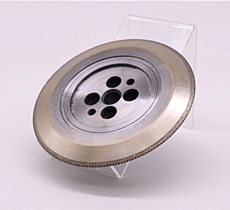
The replacement is a 6A2 vitrified-bond CBN wheel, Ø305 mm, running at a wheel speed of 1500 rpm against a workpiece speed of 65 rpm. The key process change: no dressing at all. The wheel is removed from the machine only when it is fully worn, not on a dressing schedule. The measured results across production:
Metric Result
Flatness 0.004–0.006 mm
Surface roughness Ra ≤ 0.3 µm
Cycle time 10.5 s per part
Wheel life 14,000+ parts on one wheel (still in service)
Dressing None required


Why It Works: The Physics of Dressing-Free CBN


Three properties make the no-dressing result possible. First, the vitrified bond gives high rigidity, strong grain retention, and excellent shape holding—the wheel face simply does not change geometry over thousands of parts, which is the precondition for skipping dressing. Second, CBN grains are far harder than silicon carbide; grinding powder-metal and cast iron, they do not dull or load the way GC does, so wheel life extends by roughly an order of magnitude. Third, the combination of a rigid wheel and the correct surface speed lets a single pass remove the full 0.2 mm allowance cleanly—that is what keeps the 10.5-second cycle time possible.


Where This Solution Transfers Directly


Any operation that is batch-produced, flat-faced, and stability-hungry can adopt the same approach:
  • Compressor flanges, cylinders, and roller end faces.
  • Hydraulic component end faces.
  • Bearing ring end faces.
  • Powder-metallurgy part surface grinding.
  • Batch face grinding of cast iron and hardened steel.
The case data comes from real production verification. The specific wheel configuration—grit, concentration, bond hardness—must be matched to workpiece material, hardness, allowance, and machine condition. The same line processing a different material may need a recipe adjustment; we specify the wheel against the actual workpiece and machine rather than from a catalog.


The ROI Picture: Why "Expensive Wheel" Is the Cheap Option


A vitrified CBN wheel costs more per piece than a GC wheel—there is no point pretending otherwise. But the flange shop cost model changes completely: no dressing time (the GC wheel was dressed frequently, each cycle consuming machine time and wheel material); no operator-dependent batch quality; one wheel instead of dozens of GC wheels over the same production window; and a cycle time of 10.5 seconds that did not drift as the wheel wore. Add in lower scrap from stable flatness, and the total cost per finished flange is decisively lower with CBN. For batch face grinding of hard ferrous and powder-metal parts, this is the standard economic argument—and it is why the shift from GC to vitrified CBN is accelerating across compressor, hydraulic, and bearing plants.


GC vs Vitrified CBN: Side-by-Side on This Job


Aspect GC (Green SiC) Wheel Vitrified CBN Wheel
Dressing Frequent, operator-dependent None required in this application
Wheel life Consumed in weeks; dozens of wheels per year 14,000+ parts on one wheel, still in service
Flatness stability Drifts as wheel wears; batch quality depends on operator Stable 0.004–0.006 mm across the whole wheel life
Surface finish Varies; burn risk on hard materials Consistent Ra ≤ 0.3 µm
Cycle time Dressing stops reduce effective output 10.5 s per part with no dressing stops
Operator dependency High—feel and experience decide quality Low—the process runs itself
Total cost per part High when downtime and scrap are counted Decisively lower over the production window

The comparison makes the economics concrete: the GC wheel is cheap to buy and expensive to run; the vitrified CBN wheel is the reverse. Once a shop tracks wheel consumption, dressing downtime, and scrap across a quarter, the direction of the switch is no longer debatable.


How to Specify the Right Vitrified CBN Wheel


The configuration of a dressing-free CBN wheel is decided by the workpiece and the machine, in this order: workpiece material and hardness (powder-metal versus cast iron changes grit selection); allowance per face (0.2 mm here, but heavier stock may need a coarser grit or a second pass); machine spindle condition and speed range (the wheel is designed for the actual spindle, not a catalog speed); coolant availability; and the target flatness/Ra. The 6A2 shape with a Ø305 mm diameter fits common surface grinders; other diameters, segment counts, and bore sizes are manufactured to order. We specify the wheel against the drawing and the machine—and we support the first trial runs so the process is proven before it goes into production.


Scale-Up Considerations: From Trial to Full Line


Once the trial wheel proves the numbers on one machine, the same wheel specification can usually transfer to sister machines—but only if the machines are genuinely identical in spindle condition, speed range, and coolant delivery. Differences in spindle balance or coolant filtration explain most "same wheel, different results" complaints between machines. For multi-machine lines, we recommend validating the recipe on each machine type once, then standardizing wheel specification, coolant, and dressing (where used) across the line. With a dressing-free wheel, standardization is simple: the wheel, the speed, and the coolant are the only variables to hold constant.


We Engineer the Wheel to Your Workpiece


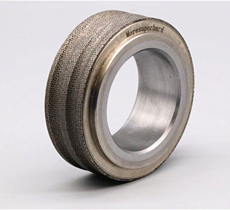
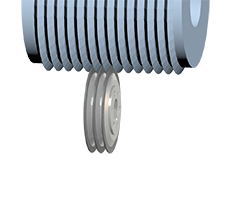
MoreSuperHard manufactures vitrified and resin-bond CBN grinding wheels for batch face grinding, including 6A2-style wheels for flange and ring faces, matched to your machine spindle, workpiece material, allowance, and target flatness and Ra. We also supply the electroplated diamond dressing rolls where dressing is needed. Send us your workpiece drawing, material, machine model, and current GC wheel specification—we will evaluate whether a dressing-free vitrified CBN solution fits your line.


Frequently Asked Questions


Q: Can a vitrified CBN wheel really run without dressing?
A: Yes, in many flat-face batch applications. The vitrified bond holds shape and retains grains, so the wheel face geometry stays stable across thousands of parts. This case ground 14,000+ compressor flanges with no dressing and the wheel was still in service.

Q: Why is CBN better than GC for cast iron and powder-metal flanges?

A: CBN grains are far harder than silicon carbide, so they do not dull or load when grinding cast iron and powder-metal parts; wheel life extends by roughly an order of magnitude, and the rigid vitrified bond holds flatness without operator-dependent dressing.

Q: What flatness and finish can be achieved?

A: This application held 0.004–0.006 mm flatness and Ra ≤ 0.3 µm at a 10.5-second cycle time, with a 0.2 mm allowance removed in one pass.

Q: Does the wheel need coolant?

A: Yes, appropriate coolant flow and filtration are recommended to control heat and flush swarf. The exact coolant strategy depends on the machine and material.

Q: How do I convert my GC operation to CBN?

A: Start with the workpiece: material, hardness, allowance, machine spindle condition, and target specs. Parameters cannot be copied from the GC process—the feed, speed, and dressing approach must be re-qualified for CBN.

Q: How much longer does a vitrified CBN wheel last vs GC?

A: In batch face grinding of cast iron and powder-metal parts, roughly an order of magnitude longer in service; this case has exceeded 14,000 parts on a single wheel and is still running.
 
FOLLOW US
This Blog keeps our valued customers informed of important Radiac News and Events, and in the industries we serve.
Copyright © 2003-2023 More SuperHard Products Co., Ltd
Home
Whatsapp
E-mail
Inquiry