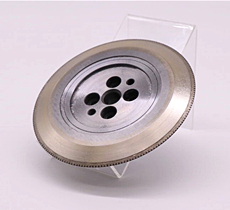
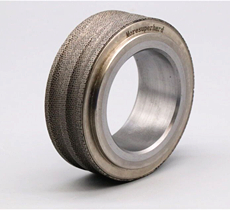
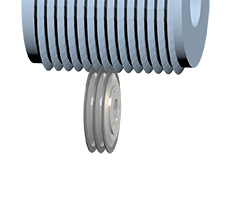
Automotive powertrain manufacturing relies heavily on ultra-stable dimensional and contour accuracy for engine camshafts, a core non-circular functional component that directly controls valve timing and overall engine power output. Many factory engineers mistakenly judge grinding wheel performance only by outer diameter, thickness and grit size when sourcing replacement abrasives. In reality, every detail marked on a grinding wheel drawing—abrasive type, grit, concentration, vitrified bond formula and internal porous structure—determines long-term production stability, wheel service life and finished cam surface quality.
MORESUPERHARD recently received a technical inquiry from a leading Indian auto component manufacturer seeking drop-in replacement superabrasive wheels for their full camshaft production line, covering both rough stock removal and precision finish grinding stages. By analyzing their original Japanese-brand CBN wheel drawing, workpiece material characteristics and mass-production performance targets, this article systematically explains why vitrified CBN wheels become the gold standard for camshaft fine grinding, how to decode standard CBN wheel model codes, and the full-system matching logic required for successful wheel replacement on mainstream cam grinders including JUNKER, LANDIS, TOYODA and NAXOS. This guide serves as a professional reference for global automotive component factories upgrading their camshaft grinding workflows.
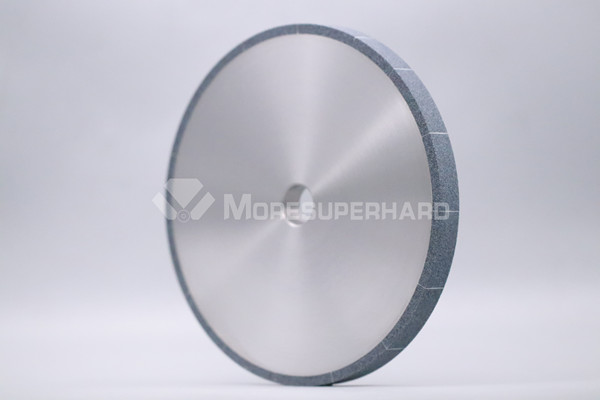
1.1 Workpiece Material Properties
The customer manufactures two mainstream camshaft materials widely adopted in global gasoline and diesel engines:
- 16MnCr5 Carburized Alloy Steel: After carburizing and quenching heat treatment, the cam working surface reaches 52–58 HRC high hardness, delivering outstanding wear resistance for long-term engine operation. However, its hardened ferrous matrix generates high grinding heat and is extremely prone to thermal burns, surface martensite transformation and subsurface microcracks if processed with low-performance abrasives.
- Gray Cast Iron Camshafts: Cast iron features excellent vibration damping and low raw material cost, ideal for economical light-duty engine applications. It creates lighter cutting loads yet demands consistent contour retention during continuous high-volume grinding.
1.2 Two-Stage Standard Camshaft Grinding Workflow
Automated cam production lines strictly separate rough grinding and finish grinding to balance removal efficiency and precision control, with completely different abrasive requirements for each stage:
Stage 1: Camshaft Rough Grinding
- Core Target: Remove 1.0 mm total unilateral machining allowance, shape the basic cam non-circular contour and eliminate forging/casting surface defects.
- Critical Wheel Requirements: Maximize material removal rate, large open chip evacuation pores, low grinding heat accumulation to avoid early thermal damage to the untreated substrate.
- Standard Abrasive Selection: Vitrified aluminum oxide corundum grinding wheels. Optimized abrasive grain distribution and high-porosity vitrified binder enable fast stock removal without clogging during heavy cutting.
Stage 2: Camshaft Precision Finish Grinding
- Finished Quality Specifications: Workpiece hardness 52–58 HRC, surface roughness Ra 0.2–0.3 μm, zero contour drift over thousands of continuous parts, no thermal burn or surface micro-defects.
- Critical Wheel Requirements: Long-term contour retention, excellent thermal conductivity, minimal abrasive wear and ultra-stable performance for non-stop mass production.
- Standard Abrasive Selection: Vitrified bond CBN grinding wheels, the only mature superabrasive solution meeting all strict automotive finish grinding standards for hardened steel camshafts.
2. Three Core Advantages of Vitrified CBN Wheels for Camshaft Fine Grinding
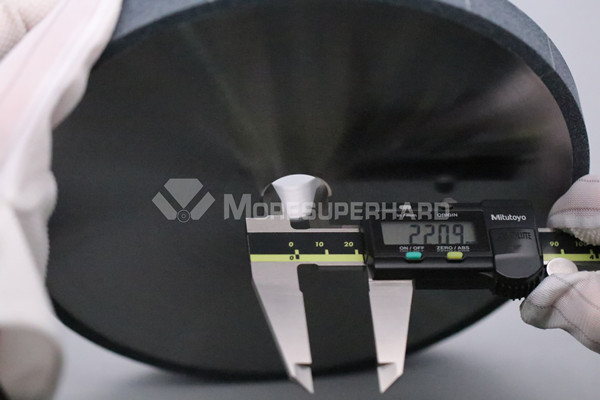
Camshaft machining differs drastically from standard cylindrical grinding due to its complex variable-radius non-circular profile. Tiny wheel wear will distort cam lift curves and disrupt engine valve movement, leading to power loss, increased fuel consumption and accelerated component aging. Vitrified CBN abrasives solve three major production pain points plaguing conventional corundum and resin CBN wheels:
2.1 Superior Long-Term Contour Retention
CBN crystal hardness and wear resistance far outperform aluminum oxide abrasives. High-concentration vitrified CBN wheels maintain precise cam profile geometry for tens of thousands of workpieces before wheel dressing is required. Factories can extend dressing intervals significantly, reduce production downtime caused by frequent wheel re-profiling and ensure 100% consistent cam dimensional tolerance across full production batches.
2.2 Effective Grinding Heat Suppression for Hardened 16MnCr5 Steel
CBN material boasts far higher thermal conductivity than regular abrasives, rapidly transferring grinding heat away from the workpiece contact zone. It eliminates three catastrophic hardening defects common in cam manufacturing: thermal surface burns, abnormal metallurgical phase transformation and subsurface microcracks that shorten cam service life under cyclic engine load.
2.3 Stable Mass Production Economics
Automotive factories prioritize total cost per finished cam rather than single wheel purchase price. Vitrified high-concentration CBN wheels deliver three measurable economic benefits: drastically extended wheel service life, fewer machine stops for wheel replacement/dressing, and reduced scrap rates from unstable contour or surface finish. For year-round continuous cam production, the total grinding expenditure drops significantly compared to conventional abrasives.
3. Step-by-Step Decoding of Standard CBN Wheel Drawing Markings: B120N175VT2K3 (1A1 400×28×152.4)
The customer’s original imported Japanese CBN wheel carries the industry standard model code B120N175VT2K3 paired with 1A1 straight wheel geometry, the most widely used format for camshaft grinders. Each letter and number represents a customized wheel design parameter:
- B = CBN Superabrasive Grain: CBN exhibits perfect chemical compatibility with ferrous hardened steel; unlike diamond abrasive, it does not react with iron alloy under high grinding temperature, avoiding rapid abrasive graphitization and failure.
- 120 = CBN Grit Size: 120# medium-fine grit strikes the optimal balance between high stock removal capacity, mirror surface finish (Ra 0.2–0.3μm) and extended wheel lifespan, the universal grit choice for automotive cam finish grinding.
- 175 = High CBN Concentration Grade: 175 concentration means a high volume of CBN grains embedded in the vitrified matrix. High-concentration design delivers superior wear resistance, stable cam contour retention and much longer intervals between dressing cycles—essential for non-stop auto component mass production.
- V = Vitrified Ceramic Bond: Vitrified binders feature open interconnected pores for efficient coolant penetration and chip evacuation, natural self-sharpening performance and easy diamond roll dressing. Vitrified CBN outperforms resin CBN in high-speed continuous cam grinding by a wide margin.
- T2K3 = Proprietary Structure & Porosity Formula Code: Each abrasive manufacturer assigns unique codes to denote internal pore volume, binder hardness and abrasive layer structure. Directly copying a competitor’s model code cannot guarantee matching machining results; full process parameter re-calibration is mandatory during wheel replacement.
- 1A1 400×28×152.4 = Wheel Geometry: 1A1 straight flat wheel shape, 400mm outer diameter, 28mm abrasive layer width, 152.4mm spindle bore, perfectly compatible with mainstream JUNKER and LANDIS cam grinding machines.
4. Why Simple Size Matching Fails for Camshaft Wheel Replacement
Most auto manufacturers only compare OD, thickness, bore and grit when sourcing alternative grinding wheels, yet four core hidden variables determine successful process replication:
- Workpiece Material & Hardness: 16MnCr5 carburized steel and gray cast iron require different CBN concentration, porosity and bond hardness to balance cutting power and wheel wear rate.
- Post-Heat Treatment Hardness Variation: Minor fluctuations in workpiece HRC demand adjusted vitrified wheel formulas to prevent glazing or overly fast abrasive shedding.
- Cam Grinder & Dressing Equipment Model: JUNKER, LANDIS, TOYODA and NAXOS cam grinders use distinct diamond dressing roll speeds, feed rates and wheel rotation limits—wheel internal structure must be customized to match each machine’s dressing system.
- Factory Production KPIs: Factories prioritize different targets: some aim for maximum wheel life, others target ultra-fine Ra surface finish or minimal dressing downtime. Our engineering team adjusts CBN concentration and porosity to align with each client’s primary production goals.
True professional wheel replacement requires a full-system audit covering workpiece material, machine hardware, dressing tools and output KPIs, rather than a basic dimensional copy of the original wheel drawing.
We deliver fully tailored superabrasive wheel packages for global automotive camshaft manufacturers replacing imported Japanese/European brand abrasives:
- Full series vitrified bond CBN cam grinding wheels in standard geometries: 1A1, 14A1, 1V1 to fit all mainstream cam grinder spindle flanges.
- Direct drop-in replacement wheels matching JUNKER, LANDIS, TOYODA, NAXOS equipment, with identical outer dimension and bore sizes for zero machine modification.
- Customized CBN grit (80#–200#), concentration (100–200), porosity and vitrified bond hardness based on 16MnCr5 steel, cast iron or alloy cam materials.
- Complete auxiliary technical support: dressing roll matching, grinding parameter optimization, on-site process trial and after-sales engineering guidance.
Our core service philosophy extends beyond supplying individual grinding wheels. We provide integrated camshaft precision grinding solutions that resolve contour drift, thermal burn, frequent dressing and high single-piece cost for auto powertrain production lines. Every wheel drawing we design is customized around the client’s actual production environment, not generic standard templates.
Conclusion
A single camshaft grinding wheel drawing encapsulates the full logic of automotive hardened steel precision machining, covering abrasive material science, binder formulation, equipment compatibility and mass-production cost control. Vitrified high-concentration CBN wheels remain the irreplaceable finishing abrasive for 16MnCr5 and cast iron camshafts, solving the industry’s biggest pain point of unstable non-circular contour during continuous high-volume grinding.
For automotive component manufacturers seeking reliable imported wheel alternatives, MORESUPERHARD offers customized vitrified CBN cam grinding wheels and end-to-end process optimization services. Our global engineering team provides free sample wheel testing, full grinding parameter tuning and production cost analysis to help factories boost cam yield, extend wheel service life and reduce overall abrasive expenditure. Contact our international sales team to receive a customized camshaft grinding solution matched to your machine model and workpiece specifications.