NEWS
29
Oct

Vitrified CBN Grinding Wheels for Automotive Camshafts: 75 m/s, Ra 0.35, QT700 at 58–62 HRC

Share:

Why Camshaft Grinding Demands a Superabrasive


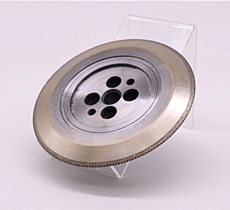
Camshafts are critical automotive engine components: their profiles and dimensional accuracy directly affect engine performance, valve timing, and operational stability. During manufacture, camshaft grinding requires abrasive tools that can handle high material hardness while holding consistent quality part after part. As engine materials move to high-hardness nodular cast iron, conventional aluminum-oxide wheels dull quickly, burn the surface, and lose profile. Vitrified CBN (cubic boron nitride) wheels address this directly: engineered abrasive structure, a rigid vitrified bond, efficient material removal, and consistent surface quality over long production runs.


Application Overview: QT700 Cast-Iron Camshafts on a JUCAM5000


This production case grinds automotive camshafts made of QT700 nodular cast iron at a workpiece hardness of 58–62 HRC. The process must remove a defined grinding allowance while achieving the required surface finish and maintaining a consistent production cycle. The vitrified CBN wheel runs at a wheel speed of 75 m/s with oil coolant. An electroplated diamond roller dresses the wheel at an interval of 100–120 workpieces. These parameters provide a practical reference for any manufacturer evaluating superabrasive grinding for automotive production.
Item Application Data
Component Automotive camshaft
Grinding machine JUCAM5000
Wheel type Vitrified CBN
Wheel dimensions 150 × 50.8 × 18.5 × 18.5 mm
Grit designation 140/170
Wheel speed 75 m/s
Workpiece material QT700 cast iron
Workpiece hardness 58–62 HRC
Diameter grinding allowance 1.2 mm
Surface roughness target Ra 0.35
Grinding cycle time 85 seconds per piece
Coolant Oil
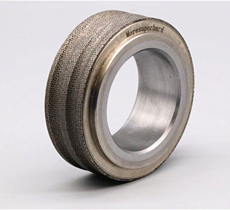
Dressing tool Electroplated diamond roller
Dressing interval 100–120 workpieces


Why Choose a Vitrified CBN Wheel for This Job


Hard-material capability.
CBN is the standard superabrasive for hard ferrous materials. At 58–62 HRC, the QT700 camshaft is well beyond the economical range of conventional abrasives; CBN holds cutting capability through the entire production shift.
Vitrified bond for controlled performance.
The bond system determines how grains are retained and released. A vitrified bond engineered for the application delivers the right combination of bond strength, porosity, and abrasive exposure—effective chip clearance, consistent cutting action, and controlled grinding behavior. The optimal formulation depends on workpiece material, machine capability, coolant, dressing method, and the required finish.
Consistent surface quality at Ra 0.35.
Surface roughness depends not only on the wheel but on machine rigidity, spindle condition, wheel balance, dressing parameters, coolant delivery, and the grinding cycle. With the wheel and dressing matched to the actual conditions, a vitrified CBN wheel supports repeatable Ra 0.35 results across the production run.
Efficient production and process control.
The recorded cycle is 85 seconds per piece with dressing every 100–120 workpieces. In mass production, cycle time and dressing frequency should be assessed together with dimensional consistency, surface quality, wheel wear, and machine utilization. A successful solution delivers reliable performance over repeated cycles—not just a good first part.


The Role of Diamond Roller Dressing


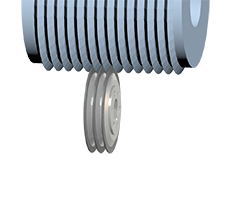
Dressing is critical to maintaining vitrified CBN performance. As the wheel wears, the cutting surface evolves and grinding conditions change. Here an electroplated diamond roller dresses the wheel every 100–120 workpieces. The ideal interval is not universal—it depends on wheel specification, allowance, material characteristics, machine condition, and finish target. Manufacturers should monitor workpiece roughness and dimension, grinding forces and vibration, wheel loading, dressing depth and feed, roller condition, and the consistency of results before and after dressing. Coordinating the wheel specification with a disciplined dressing strategy is what makes production predictable.


Key Factors in Camshaft Grinding Optimization


For high-hardness camshaft grinding, the wheel should never be optimized in isolation. Five factors work together: wheel specification (grit, bond, structure matched to material, allowance, finish); wheel operating speed (75 m/s here, always within the rated maximum and the machine builder’s limits); coolant delivery (oil in this case—flow, filtration, and delivery to the grinding zone manage heat and swarf); dressing strategy (interval and parameters set from actual grinding results, not a fixed count); and machine/process stability (machine condition, wheel balance, clamping, and process parameters). A systematic evaluation of these factors is how manufacturers find process improvements without compromising quality.


Conclusion: A Proven Reference for Superabrasive Camshaft Grinding


This case demonstrates a vitrified CBN wheel machining QT700 cast-iron camshafts at 58–62 HRC—75 m/s wheel speed, 85 seconds per piece, Ra 0.35, and diamond-roller dressing every 100–120 workpieces. Reliable results come from coordinated selection of the wheel, dressing method, coolant, and machine parameters against actual workpiece requirements. For manufacturers seeking to optimize camshaft grinding, the right vitrified CBN wheel is an important step toward consistent quality and efficient process control.


Monitoring Checklist for Stable Camshaft Production


In mass production, the wheel is not the only variable. A practical monitoring routine keeps the process stable between dressings and between wheel changes:
  • Workpiece surface roughness and profile: check per batch against the Ra 0.35 target and the cam-lobe profile tolerance.
  • Grinding forces and vibration: a rising power draw or new vibration signature signals wheel loading or imbalance.
  • Wheel wear and cutting behavior: track how cycle time drifts as the wheel wears—the dressing interval should be set before quality drops, not after.
  • Dressing depth, feed rate, and roller condition: record the dressing parameters and inspect the diamond roller for wear so dressing stays consistent.
  • Results before and after dressing: log the first piece after each dress; a jump in quality indicates the dressing interval was too long.
Camshaft plants that run this loop continuously get two benefits: they catch drift early, and they collect the data needed to extend dressing intervals safely—which is where the real cost saving sits.


CBN Wheel Economics in Camshaft Production


The purchase price of a vitrified CBN wheel is higher than a conventional wheel—that is the first number every buyer sees. The production economics tell a different story. One CBN wheel grinds tens of thousands of camshafts with dressing every 100–120 parts; a conventional wheel dulls within a small fraction of that run, requiring frequent dressing and replacement. When cycle time (85 s/part), dressing frequency, wheel consumption, and scrap are totaled per finished camshaft, the CBN wheel typically wins by a wide margin. The relevant question is never "what does the wheel cost?" but "what does each finished camshaft cost with this wheel?"—and that is the number the data in this case supports.


Looking for a Vitrified CBN Grinding Solution?


MoreSuperHard specializes in superabrasive grinding products: vitrified CBN wheels, resin-bond CBN wheels, diamond wheels, and diamond dressing tools. We work with customers to evaluate grinding requirements and develop wheel specifications suited to their workpiece materials, machine conditions, and production targets. Contact us to discuss your camshaft or hard-ferrous grinding application and explore a suitable CBN wheel solution.


Frequently Asked Questions


Q: Why use a vitrified CBN wheel for camshaft grinding?
A: Camshafts in QT700 nodular cast iron at 58–62 HRC are beyond the economical range of conventional abrasives. Vitrified CBN handles the hardness, holds profile, and supports consistent Ra 0.35 over long production runs.

Q: What is a typical camshaft grinding cycle time?

A: In this production case, 85 seconds per piece with a 1.2 mm diameter allowance at Ra 0.35. Cycle time should be evaluated together with dressing frequency, dimensional consistency, and wheel life.

Q: How often should the CBN wheel be dressed?

A: Here, an electroplated diamond roller dresses the wheel every 100–120 workpieces. The optimal interval depends on wheel spec, allowance, material, machine, and finish target—set it from actual grinding results.

Q: What coolant is used for camshaft CBN grinding?

A: Oil coolant is used in this case. Appropriate flow, filtration, and delivery to the grinding zone manage heat and swarf; the coolant strategy must be matched to the wheel and machine.

Q: Can vitrified CBN wheels grind materials other than camshafts?

A: Yes. Vitrified CBN is suited to any hard ferrous material—crankshafts, gears, bearing rings, rolls, and other hardened steel components—where profile holding, surface finish, and long life are required.

Q: How do I select the right CBN wheel for my camshaft line?

A: Send the workpiece material and hardness, grinding allowance, target Ra, machine model, coolant type, and current wheel spec. The grit, bond, and structure should be engineered against the actual conditions, not chosen from a catalog.
FOLLOW US
This Blog keeps our valued customers informed of important Radiac News and Events, and in the industries we serve.
Copyright © 2003-2023 More SuperHard Products Co., Ltd
Home
Whatsapp
E-mail
Inquiry