NEWS
09
Sep

Grooving Grinding Wheels: Benefits, Risks & Best Practices for CBN Wheels

Share:

What Is Grinding Wheel Grooving?


                             Grooving Grinding Wheels


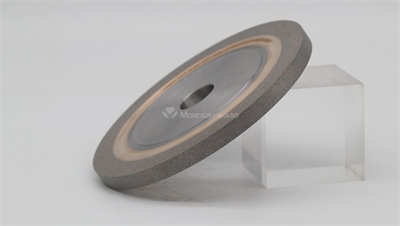
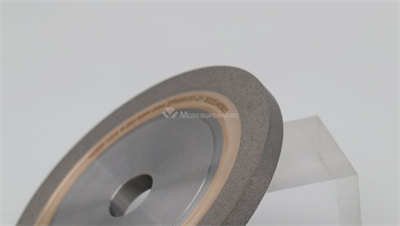
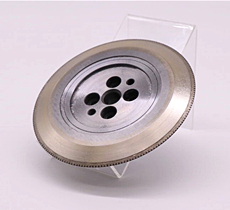
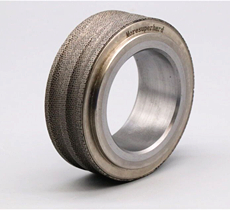
Grinding wheel grooving—also called slotting or serrating—is the process of cutting narrow, precision channels into the abrasive layer of a grinding wheel to improve coolant delivery and chip evacuation. Widely used on resin-bond CBN (cubic boron nitride) wheels for grinding hardened steels, tool steels, and automotive components, grooved wheels feature U-shaped channels distributed across the abrasive ring. These channels allow cutting fluid to reach the grinding contact arc directly and provide space for chips to escape. While grooving offers significant thermal and productivity benefits, it also introduces trade-offs that must be carefully evaluated. This guide covers recommended dimensions, proven benefits, potential risks, and best practices for implementing grooved grinding wheels in your production process.

Recommended Groove Dimensions for Resin CBN Wheels


Proper groove geometry is critical—incorrect dimensions can cause clogging, excessive wheel wear, or structural failure. Follow these specifications for resin-bond CBN grinding wheels:
  1. Groove Width: 1.0–1.5 mm. Too narrow and the groove clogs with iron chips; too wide and the effective grinding area is reduced unnecessarily.
  2. Groove Depth: 40–50% of the total abrasive layer thickness only. Never cut through to the substrate bond interface. Example: for a 6 mm abrasive layer, control groove depth at 2.5–3 mm. Cutting through the abrasive layer causes wheel failure.
  3. Groove Shape: U-shaped with rounded corners, root radius R0.5–R1. Sharp right angles are prohibited—they create stress concentration points that lead to cracking.
  4. Groove Location: Channels must be cut only in the abrasive ring area. Never extend grooves into the aluminum or steel substrate.

Key Benefits of Grinding Wheel Grooving


1. Heat Dissipation and Reduced Workpiece Burning


The primary benefit of grooving is improved cooling. Cutting fluid flows directly through the grooves into the grinding contact arc zone, rather than merely floating over the wheel surface. This direct coolant delivery removes grinding heat at the source. Because resin bonds have relatively poor heat resistance, grooving significantly reduces the risk of resin softening and rapid wheel wear caused by high temperatures. It is especially effective for eliminating grinding burn on hardened steel components.

2. Improved Chip Evacuation


Grinding chips are quickly flushed away by coolant flowing through the groove cavities. This reduces chip embedding inside the wheel pores, preventing wheel loading and glazing. Improved chip evacuation maintains the wheel's self-sharpening behavior, keeping cutting edges sharp and consistent over longer production runs.

3. Better Surface Finish and Reduced Vibration


Grooving creates intermittent grinding action with a micro chip-breaking effect, reducing continuous frictional heat. With more effective coolant delivery, workpiece thermal deformation is minimized, resulting in improved surface roughness (Ra) and reduced vibration marks (chatter) on finished parts.

4. Lower Grinding Forces


Under the same feed conditions, grooving reduces the total contact area between wheel and workpiece, lowering unit grinding forces. This reduces machine tool load, spindle power consumption, and allows higher feed rates in some applications—particularly beneficial for less rigid grinding machines.

Potential Risks and Limitations


Grooving is not without trade-offs. These risks must be communicated to customers before implementation:
  1. Reduced material removal rate: Grooving decreases effective grinding area, causing a slight drop in stock removal efficiency under identical parameters. Customers must accept minor parameter adjustments.
  2. Chipping risk from secondary milling: Grooving a finished wheel by secondary milling carries a risk of slight abrasive chipping at groove edges. It is strongly recommended to integrate grooving into the mold during wheel manufacturing rather than post-machining.
  3. Dynamic balance changes: Grooving alters the wheel's mass distribution. Dynamic balancing must be re-verified after grooving—failure to do so causes vibration at high operating speeds.
  4. Not a complete burn solution: Resin bonds remain heat-sensitive. Grooving improves cooling but does not eliminate burn risk entirely. Adequate coolant flow and pressure must still be maintained.
  5. Dressing process adjustment: Diamond dressing tools must avoid groove areas during wheel dressing, otherwise the dresser point can chip or break when it enters a channel.

Best Practices for Grooved Wheel Operation

  Always re-balance the wheel after grooving and after each wheel change.
  • Use high-pressure, well-filtered coolant (≤10 µm) directed at the grinding contact zone—grooves amplify coolant effectiveness only when flow and pressure are adequate.
  • Adjust dressing parameters to skip groove areas; use a rotary diamond dresser rather than single-point for grooved wheels when possible.
  • Monitor grinding power (spindle current) and surface finish to detect groove clogging or wheel wear early.
  • Start with conservative feed rates when switching from a solid wheel to a grooved wheel, then optimize based on measured results.
  • Inspect grooves periodically for chip packing; clean or dress the wheel if clogging is observed.

When Should You Use a Grooved Grinding Wheel?


Grooved wheels are particularly beneficial in the following scenarios: grinding hardened steels (HRC 50+) prone to thermal burn; high-volume production where wheel loading reduces throughput; operations with limited coolant pressure where direct fluid delivery is critical; and applications requiring improved surface finish with reduced chatter. Conversely, grooving may not be ideal for ultra-heavy stock removal operations where maximum grinding area is essential, or for very fine finishing where the intermittent contact may affect surface uniformity. Consult with your abrasive supplier to determine whether grooving is right for your specific application.

Why Choose Our Grooved CBN Grinding Wheels


We manufacture high-performance resin-bond CBN grinding wheels with integrated grooving, produced via mold forming during manufacturing to eliminate post-machining chipping risk. Our wheels are engineered with precision-controlled groove dimensions (1.0–1.5 mm width, 40–50% depth, U-shaped rounded profiles) and undergo dynamic balancing before shipment. We offer full customization—including groove pattern, pitch, CBN grit size, and resin bond formulation—to match your specific workpiece, machine, and grinding parameters. Our application engineers provide process support, including coolant optimization and dressing parameter recommendations, to help you achieve burn-free grinding, improved surface finish, and longer wheel life. Contact us today for a customized grooved CBN wheel solution and technical consultation.

Conclusion


Grinding wheel grooving is a proven technique for improving coolant delivery, chip evacuation, surface finish, and grinding force reduction in resin CBN wheel applications. By following precise dimension guidelines—1.0–1.5 mm width, 40–50% depth, U-shaped rounded grooves, abrasive-ring-only placement—manufacturers can unlock these benefits while avoiding structural risks. However, grooving requires careful management: re-balancing after machining, adjusted dressing procedures, maintained coolant pressure, and acceptance of slightly reduced stock removal rates. When implemented correctly with mold-integrated grooving and proper process support, grooved CBN wheels deliver measurable improvements in grinding quality and productivity for hardened steel and high-precision applications.

Frequently Asked Questions

Q: What is the ideal groove width for a resin CBN grinding wheel?
A: The recommended groove width is 1.0–1.5 mm. Grooves narrower than 1.0 mm tend to clog with iron chips, while grooves wider than 1.5 mm unnecessarily reduce the effective grinding area. The optimal width depends on your specific chip size and coolant flow.

Q: How deep should grooves be cut into the abrasive layer?
A: Groove depth should be 40–50% of the total abrasive layer thickness, and must never reach the substrate bond interface. For example, a wheel with a 6 mm abrasive layer should have grooves 2.5–3 mm deep. Cutting through the abrasive layer causes structural failure and wheel breakage.

Q: Does grooving reduce grinding wheel life?
A: Grooving slightly reduces the total abrasive volume, but improved cooling and chip evacuation often extend effective wheel life by preventing resin softening, loading, and glazing. Net life depends on the application—in burn-prone hardened steel grinding, grooved wheels typically last longer than solid wheels.

Q: Can I groove an existing grinding wheel after purchase?
A: While secondary milling is possible, it carries a risk of edge chipping and always requires re-balancing. We strongly recommend mold-integrated grooving during wheel manufacturing for best quality and consistency. If post-machining is necessary, use a sharp milling tool and verify dynamic balance before use.

Q: Will grooving completely eliminate grinding burn on hardened steel?
A: No. Grooving significantly improves coolant delivery and reduces burn risk, but it does not replace proper coolant flow, pressure, and filtration. Resin bonds remain heat-sensitive. For severe burn-prone operations, combine grooving with optimized coolant parameters and, if needed, consider vitrified CBN wheels with higher heat resistance.

Q: How do I dress a grooved grinding wheel?
A: Dressing tools must avoid entering the grooves—single-point diamond dressers can chip or break when they hit a channel. Rotary diamond dressers are preferred for grooved wheels. Adjust dressing parameters to account for the reduced contact area, and inspect groove condition regularly for clogging or damage.
 
FOLLOW US
This Blog keeps our valued customers informed of important Radiac News and Events, and in the industries we serve.
Copyright © 2003-2023 More SuperHard Products Co., Ltd
Home
Whatsapp
E-mail
Inquiry