NEWS
25
Nov

Double Disc Grinder and CNC Internal Grinder for Composite Laminates

Share:

The Enquiry Was Already a Specification


A composite materials manufacturer in Ghaziabad, India, sent a formal request for two machines: a double disc grinding machine and a CNC internal cylindrical grinding machine. What made it unusual was the structure of the request. It did not ask for a price. It asked for a quotation that included machine model and technical specifications, basic price, delivery, installation and commissioning, and warranty terms—the full commercial envelope in one document.

                                        Grinding Machine


That is how a purchasing department with a real budget writes, and it changes the job. The technical answer is still the core, but an offer that omits delivery, commissioning, spares or warranty will be eliminated before the technical content is read. Below is what such an RFQ actually requires, why composite laminates need a different machine specification than metals, and what a defensible offer contains.


                                 grinding machine


Why Laminates Are Not "Just Soft Metal"


Composite laminates—phenolic, epoxy-glass, paper-based and similar—behave nothing like steel on a grinder. They are anisotropic, they delaminate under axial force, they conduct heat poorly, and they machine into a dust that is both an abrasion problem and a health problem. Four consequences follow:
  • Delamination is the dominant scrap mode. Force normal to the laminate plane separates plies. Cutting force must be low, and the wheel must be sharp and open—never glazed.
  • Dust, not chips. The swarf is fine abrasive powder that plugs wheel porosity and filtration. Extraction and coolant cleanliness become machine requirements, not housekeeping.
  • Heat stays in the part. Poor conductivity means burn and resin smear appear at lower specific energy than in steel, so coolant delivery and wheel speed need to be chosen for heat removal, not for removal rate.
  • Edge quality is the acceptance criterion. A laminate part is judged by chipping, fibre pull-out and burr at the edge—metrics that a metal shop would never write into an acceptance document.


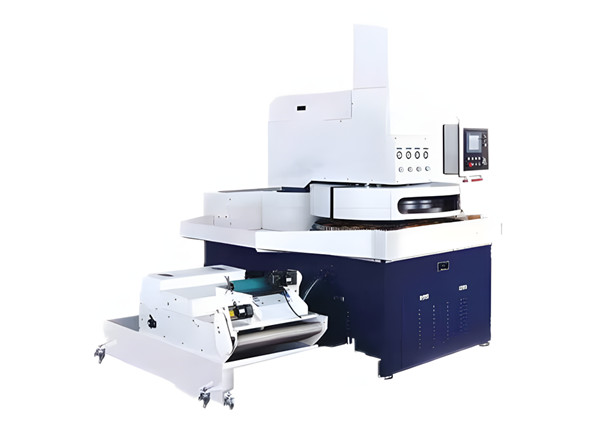
Machine 1: Double Disc Grinder for Laminate Faces


The double disc machine grinds two parallel faces simultaneously, which is the right tool for flat laminate blanks: thickness control comes from the wheel gap, and flatness and parallelism are produced in one pass instead of two setups. For laminates the specification changes in five places:
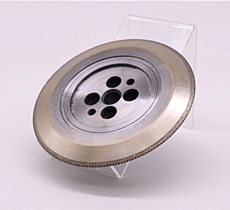
  • Abrasive: diamond is the usual choice for glass- and ceramic-filled laminate, since the filler is harder than most conventional abrasives. For unfilled phenolic, a sharp vitrified or resin diamond specification with an open structure avoids glazing.
  • Bond and structure: open, free-cutting wheels. A dense wheel polishes the resin, generates heat and smears.
  • Force control: low normal force with a controlled infeed, because delamination thresholds are low and a short, aggressive plunge is the classic cause of blow-out.
  • Coolant and extraction: high-flow coolant at the contact, plus dust extraction sized for powder rather than chips; filtration must handle fine abrasive particulate without clogging.
  • Edge support: the carrier or fixture has to back up the laminate at the exit side of the cut, or the last plies tear out regardless of wheel specification.


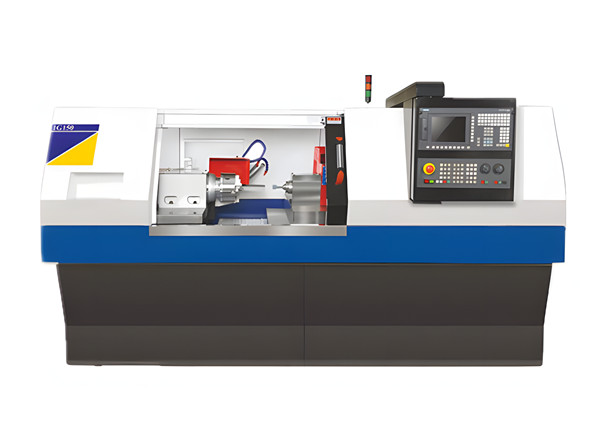
Machine 2: CNC Internal Grinder for Laminate Bores


Bore grinding in laminate is a different problem again. The bore is usually a bearing seat or a bushing location, so diameter and roundness matter; but the wall is often thin and the material has almost no stiffness, so clamping dominates the result. The specification items that matter:
  • Workholding: diaphragm, collet or a fixture with distributed axial clamping. A three-jaw chuck on a laminate ring deforms it, and the bore is ground out of round.
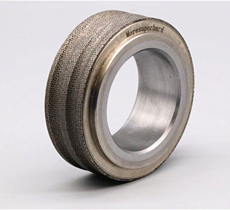
  • Spindle: high-speed, low-runout quill with a small CBN or diamond wheel; the wheel has to cut, not rub.
  • Infeed strategy: small increments with spark-out. A laminate bore will spring back, and a single heavy plunge produces a taper plus a smeared surface.
  • Measurement: in-process or post-process gauging of diameter and roundness, with the acceptance criterion written before the trial, not after.
  • Dust management: the same extraction and filtration issue as the double disc machine, but inside a confined bore where coolant flushing is harder.


What a Complete Offer Has to Contain

 
Section Content that survives evaluation Where suppliers usually fail
Model and specification Model designation, capacity, spindle power and speed, axis resolution, control system A brochure without the axis and spindle data
Process proposal Wheel specification, workholding, coolant, expected cycle time for the customer part Generic "suitable for your application"
Price structure Machine, wheel package, workholding, gauging, freight, duties basis, optional items separated One lump figure with no breakdown
Delivery Ex-works or delivered lead time, with the milestone that starts the clock A lead time without an Incoterm
Installation and commissioning Days on site, who supplies power/coolant/air, who supervises the first production run Left implicit
Training Operator and maintenance training, duration, language, location Mentioned as "free training" with no scope
Warranty Period, coverage, exclusions (consumables, crash damage), response time and spare parts availability Warranty of "one year" with no response commitment
Documentation Electrical drawings, manuals, spare parts list, CE or equivalent declaration where applicable Not mentioned until after the order


The Commercial Details Buyers Actually Compare


When two offers are technically close, the decision moves to four items. First, response time on a breakdown—stated in hours, not "promptly", because a laminate line stopped for a week costs more than the machine. Second, spare parts availability and whether critical spares ship from stock. Third, who owns the process guarantee: if the machine holds thickness but the wheel glazes and the edge chips, the customer should not be the one arbitrating between two suppliers. Fourth, whether the commissioning includes a first-production acceptance run on the customer's own parts, measured against agreed metrics.
Those four are the difference between a machine sale and a process delivery—and on composite work, with delamination and dust in play, they are usually what decides the order.


Payment Structure and Risk Allocation


A two-machine order at this value is normally split into milestones: a deposit on order, a payment at pre-shipment inspection, a payment on arrival, and a retention released at acceptance. The supplier should propose the split and state what each milestone is evidenced by—factory acceptance test report, shipping documents, commissioning sign-off. Buyers compare this as closely as they compare price, because a payment schedule with no acceptance milestone transfers all the technical risk to the customer.
Two clauses are worth agreeing in writing before the order. The first is the performance criterion: which part, which metrics, how many consecutive pieces, measured by whom. The second is the remedy if the criterion is missed—rework, wheel re-specification, or a defined price adjustment. Neither clause is hostile; both are what makes a first order repeatable as a second order.


A Note on the Two-Machine Scope


Buying a double disc machine and a CNC internal grinder together is not two independent purchases. The two machines share a coolant strategy, a dust extraction philosophy, a gauging approach and often a workholding datum if the parts are related. Quoting them as one scope lets the supplier size the extraction once, standardise the filtration, and propose a single acceptance protocol—which is exactly what a purchasing department with a formal RFQ is trying to buy.


What MoreSuperHard Provides


MoreSuperHard supplies double disc grinding machines and CNC internal cylindrical grinding machines as complete packages—wheel specification, workholding, coolant and extraction, gauging, installation, commissioning, training and warranty—quoted against the customer part rather than against a catalogue range. For laminate work we specify diamond and CBN wheels with open structure, low-force infeed, and edge support in the fixture, because that is where delamination is actually prevented.
If you are issuing an RFQ for two machines, send the part drawings with material grade and filler content, thickness and bore tolerance, flatness and parallelism, edge quality requirement, annual volume, available utilities and the required delivery window. We will return a technical proposal with cycle time estimates, a full commercial breakdown, and the acceptance criteria we expect to be measured against.


Frequently Asked Questions


Q: Which abrasive grinds glass-filled composite laminates?
A: Diamond, because the glass or ceramic filler is harder than conventional abrasives. The wheel must be open and free-cutting to avoid resin smear and glazing.

Q: Why does a laminate part delaminate during double disc grinding?

A: Force normal to the laminate plane separates plies. Low normal force, controlled infeed, edge support in the fixture and an open wheel structure are what prevent it.

Q: What workholding suits a thin-walled laminate bore?

A: Diaphragm, collet or distributed axial clamping. A three-jaw chuck deforms the wall and the bore is ground out of round before it springs back.

Q: What should a grinding machine RFQ include?

A: Model and full specification, process proposal with wheel and cycle time, itemised price, delivery with Incoterm, installation and commissioning scope, training, warranty with response time, and documentation.

Q: Why buy the double disc machine and the internal grinder as one scope?

A: They share coolant, extraction, filtration and gauging philosophy. One scope also gives a single owner for the acceptance result instead of two suppliers arbitrating scrap.

Q: What acceptance metrics apply to laminate grinding?

A: Thickness and flatness, bore diameter and roundness, plus edge quality: chipping, fibre pull-out and burr. Absence of resin smear and burn should be included as well.
 
FOLLOW US
This Blog keeps our valued customers informed of important Radiac News and Events, and in the industries we serve.
Copyright © 2003-2023 More SuperHard Products Co., Ltd
Home
Whatsapp
E-mail
Inquiry