1. Introduction: A Common Headache in Carbide Internal Grinding
Manufacturers specializing in hard metal (carbide) internal grinding often encounter a perplexing problem: identical diamond grinding wheels, unchanged parameters, same workpiece material perform perfectly for large‑diameter bores but produce severe inner‑wall scratches and plummeting yields when switching to smaller‑diameter bores.
At first glance, most operators suspect poor wheel quality, excessive grain shedding, or inconsistent abrasive distribution. However, on‑site investigations repeatedly confirm the wheel itself is not the problem. The core issue lies in changed machining conditions caused by reduced bore size, leading to inadequate cooling, poor chip evacuation, and trapped free abrasives.
This article dissects a real‑world customer case, analyzing why 30mm bore runs smoothly while 27mm bore causes scratches, explaining the hidden mechanics, and providing actionable solutions. It serves as a practical reference for manufacturers facing similar small‑bore grinding challenges.
2. Customer Case Overview: Same Wheel, Different Bore Sizes
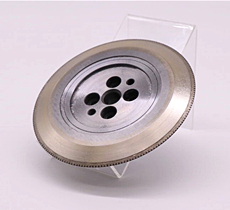
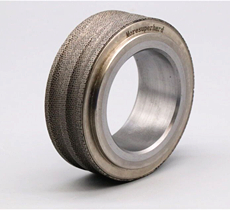
The customer produces solid carbide components requiring precision internal grinding. They use a standard D25‑T25‑H12 600# resin‑bond diamond internal grinding wheel for all internal bore operations.
Stable Production with 30mm Bore
For months, the setup ran flawlessly for 30mm inner diameter workpieces:
- Smooth inner surface with no scratches, burn marks, or burrs
- Consistent surface roughness meeting specifications
- Satisfactory wheel durability for mass production
- Zero quality issues affecting output
Sudden Scratch Problem with 27mm Bore
When the customer switched to a new product with a 27mm inner diameter, all other factors remained identical:
- Same grinding machine
- Same wheel parameters (speed, feed, coolant flow)
- Same D25‑T25‑H12 600# resin diamond wheel
- Same carbide workpiece material
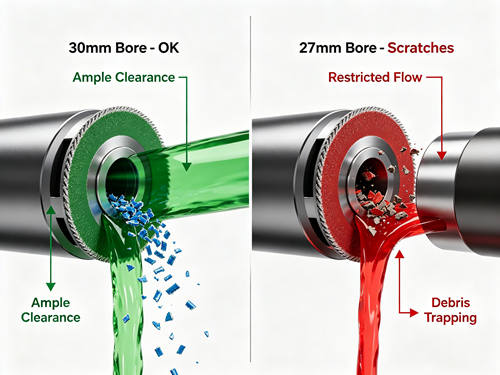
Yet the 27mm bore suffered regular, patterned inner‑wall scratches, drastically increasing defect rates and halting stable mass production.
Critical Observation
The wheel worked perfectly for 30mm bore but failed for 27mm bore—a mere 3mm reduction in diameter. This stark contrast proves the issue stems from machining condition changes due to smaller bore size, not wheel quality.
3. Root Causes: Why Smaller Bores Cause Scratches
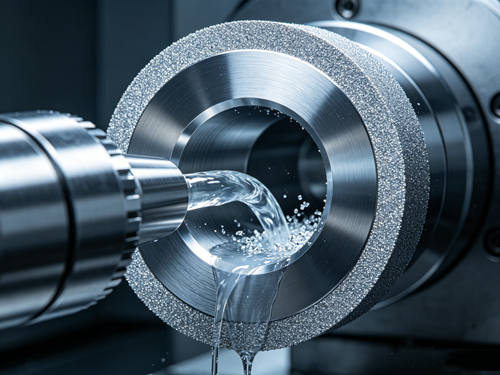
Internal grinding relies entirely on coolant flow and chip evacuation through the gap between the wheel and the workpiece bore. Larger bores create wider gaps, enabling sufficient coolant flow, effective flushing, and unobstructed chip removal. Smaller bores narrow this gap, making conditions far more demanding.
Cause 1: Reduced Gap Severely Impairs Coolant Flow & Chip Evacuation
Resin‑bond diamond wheels naturally shed fine diamond grains during operation—a normal self‑sharpening mechanism essential for maintaining cutting sharpness. Combined with fine carbide chips generated during grinding, these particles require strong coolant flow to be flushed away.
With a 30mm bore, the gap between the wheel and bore wall is wide enough for high coolant velocity and sufficient flow volume, easily carrying away loose diamond grains and carbide debris.
When the bore shrinks to 27mm, the gap narrows significantly:
- Coolant flow volume and velocity drop sharply
- Flushing power becomes insufficient to remove debris
- Loose diamond grains and carbide chips get trapped between the wheel and bore wall
- Trapped particles rotate at high speed with the wheel, abrading the inner surface and causing scratches
Cause 2: Larger Contact Area Increases Heat & Chip Generation
A fixed‑size diamond wheel contacts a larger area when grinding a smaller bore:
- 30mm bore: Smaller contact area → less heat and fewer chips
- 27mm bore: Larger contact area → more heat and more chips per unit time
This creates a double pressure:
- Less coolant flow due to narrower gaps
- More heat and chips due to larger contact area
Debris accumulates rapidly, worsening scratches as the grinding cycle progresses.
Key Misconception: Grain Shedding Is Not the Problem – Trapped Debris Is
Many operators blame excessive grain shedding for scratches, but this is a misunderstanding. Minor, natural grain shedding is a critical advantage of resin‑bond wheels, ensuring consistent sharpness and preventing glazing or burning.
The real issue in small‑bore grinding is the closed, confined space that traps normally shed grains. In large bores, these grains are flushed away harmlessly; in small bores, they become destructive abrasives.
4. Effective Solutions to Eliminate Scratches in Small‑Bore Grinding
Based on on‑site analysis, we provided two complementary solutions to resolve the 27mm bore scratch issue.
Solution 1: Increase Coolant Flow & Flushing Pressure
First, optimize coolant delivery:
- Raise coolant pressure and flow rate
- Direct coolant precisely at the grinding zone
- Improve flushing power to clear debris
This reduced scratches but could not eliminate them entirely due to equipment hardware limitations restricting maximum coolant flow.
Solution 2: Customize a Smaller‑Diameter Wheel (Permanent Fix)
Since the existing wheel was oversized for the 27mm bore, we designed a smaller‑diameter custom diamond wheel:
- Restored sufficient gap between wheel and 27mm bore
- Reestablished normal coolant flow and chip evacuation
- Reduced contact area to balance heat and chip generation
The custom wheel completely eliminated scratches, restoring stable mass production.
5. Additional Process Recommendations for Small‑Bore Carbide Grinding
While the scratch issue was unrelated to wheel dressing (not caused by dull wheels or poor dressing), we recommend these practices for long‑term small‑bore production:
Regular Wheel Dressing
- Dress wheels periodically to remove fatigued, loosely bonded grains
- Prevent sudden, large‑scale grain shedding during grinding
- Maintain consistent cutting sharpness and surface quality
Match Wheel Size to Bore Diameter
- Use larger wheels for larger bores (≥30mm)
- Use smaller, customized wheels for smaller bores (<30mm)
- Ensure sufficient gap (typically 1–2mm) for coolant flow
Optimize Coolant System
- Use high‑pressure, high‑flow coolant pumps for small‑bore grinding
- Install targeted nozzles to direct coolant at the grinding contact zone
- Use clean, filtered coolant to avoid introducing external abrasives
6. Conclusion: One Wheel Does Not Fit All Bore Sizes
This case highlights a critical truth: the same diamond wheel optimized for large bores is not suitable for small bores. Small‑bore carbide internal grinding demands stricter control over coolant gaps, chip evacuation, and contact area.
When encountering "large bore OK, small bore scratches":
- Do not immediately blame wheel quality
- Prioritize checking gap size, coolant flow, and chip evacuation
- Customize wheel size to match bore diameter
- Optimize coolant pressure and delivery
By addressing these factors, you can eliminate scratches, improve yield, and ensure stable mass production for small‑bore carbide components.
For custom resin‑bond diamond internal grinding wheels tailored to your bore sizes and materials, contact our technical team today.