NEWS
26
Nov

Ceramic-Bond Diamond Disc Wheels for TC4 Titanium: A Practical Feasibility Assessment

Share:

The Short Answer


Ceramic-bond diamond discs can grind TC4 titanium. That is the finding of published work that ran the combination on a machining centre and optimised the parameters against measured grinding force and temperature. The result is technically sound: diamond is hard enough to cut a high-strength titanium alloy, and a ceramic bond with a porous structure helps move chips away and keeps the contact cooler, which matters on a material that conducts heat poorly.


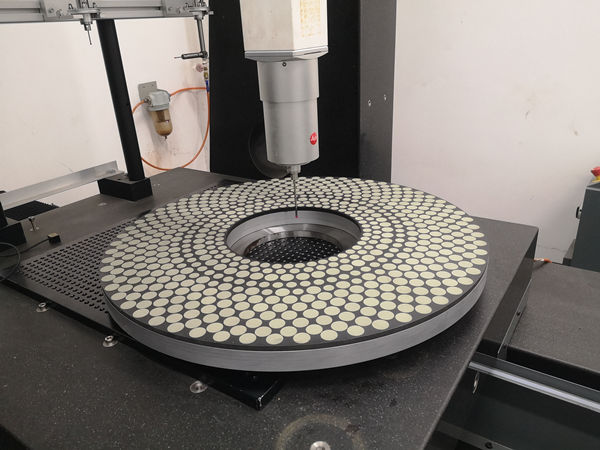
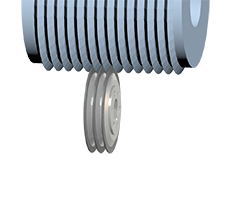
                                       Ceramic-Bond Diamond Disc Wheels


What that work does not support is the idea that ceramic-bond diamond is the default answer for every TC4 operation. Three constraints decide whether it is the right specification—speed, chemistry and bond toughness—and each of them can make a different wheel the better commercial choice. This article sets out where each constraint bites, so the decision is made on the process rather than on the abrasive label.


Why TC4 Is Hard to Grind


TC4, or Ti-6Al-4V, is the most widely used titanium grade: high strength-to-weight ratio, good corrosion resistance, and used wherever a part has to be light, strong and durable—medical implants, chemical and process equipment, marine hardware, energy components and precision industrial assemblies. It is also one of the least cooperative materials on a grinding wheel:
  • Heat has nowhere to go. Titanium conducts heat at roughly a seventh of steel, so the energy generated at the contact stays at the contact. The surface reaches temperature quickly, and thermal damage appears before the part looks wrong.
  • The chip sticks. Titanium is chemically active and has a strong tendency to adhere to the abrasive, so the wheel loads, the cutting edge dulls and force climbs. A loaded wheel generates more heat, which accelerates the loading—the failure is self-reinforcing.
  • The material springs back. Low elastic modulus means the workpiece deflects under force and recovers after the pass, so the finished size is smaller than the machine setting and the wheel has to keep cutting a moving surface.
  • It reacts with carbon at temperature. Diamond is carbon. At the temperatures reached in a titanium contact zone, chemical reaction between the two accelerates abrasive wear—a mechanism that has nothing to do with hardness.


Where Ceramic-Bond Diamond Works


The case for the combination rests on three properties that line up with the difficulties above. First, diamond hardness allows a genuinely sharp cutting action at low specific force, which reduces the heat generated per unit of stock removed. Second, a ceramic bond can be made with controlled porosity, giving chip clearance and coolant access at the contact—the practical answer to loading. Third, the bond is thermally stable and chemically resistant, so it tolerates the temperature that the workpiece cannot dissipate.
In double disc configuration the case gets stronger for a different reason: two faces are ground in one pass at one setting, so flatness and parallelism come from the machine geometry rather than from a second fixturing. On a thin titanium part that would deflect during a second setup, that is a real process gain, not a catalogue claim.


Constraint One: The Speed Window


Comparative work on TC4 shows diamond performing well in the medium and high speed range, while in the medium and low speed range a ceramic-bond zirconia alumina wheel delivers better value. The reason is economic rather than metallurgical: at lower wheel speeds the diamond’s advantage in specific force narrows, while its cost per carat does not. If the operation is a low-speed finishing pass on a conventional machine, a zirconia alumina wheel will often produce an acceptable result at a fraction of the tooling cost.
This is the single most useful sentence to take from the literature: the speed range decides, not the abrasive. A shop running at 25–35 m/s and a shop running at 60–80 m/s are asking two different questions, and only one of them is a diamond question.


Constraint Two: Chemical Affinity


Diamond and titanium do not coexist comfortably at temperature. The carbon in the abrasive reacts with the workpiece, the grain wears chemically rather than mechanically, and the worn grain polishes instead of cuts—which raises force, raises temperature and drives further reaction. Published work on high-efficiency deep grinding of titanium points to CBN as the more suitable abrasive in that regime, because boron nitride is chemically more inert against titanium and adhesion wear is reduced.
The practical translation is a split by regime rather than a single recommendation: ceramic-bond diamond suits moderate-speed, moderate-depth work where low force and good chip clearance matter; CBN takes over where the depth of cut and the removal rate are pushed hard and chemical wear would dominate. A supplier who offers both and can explain the boundary is more useful than one who recommends either unconditionally.


Constraint Three: Bond Brittleness


A ceramic bond is thermally robust but mechanically brittle. On a tough, high-strength material with an interrupted or unstable contact, grain retention becomes the weak point: if the infeed is too aggressive or the wheel is not dressed properly, grains release early, the wheel loses form and the force rises again.
This is a parameter and dressing problem, not a reason to reject the bond. Small infeed increments, a properly conditioned face after dressing, and a coolant stream that actually reaches the arc are what keep the grain in the bond. The failure signature is recognisable: a wheel that starts well and then drifts in size and force over a few hundred parts is losing grains, not wearing them.


Selection Matrix

 
Regime Wheel choice Why
Low speed, light stock, conventional machine Ceramic-bond zirconia alumina Cost per part is lower; diamond advantage does not pay back
Medium speed, moderate depth, form and flatness critical Ceramic-bond diamond disc Low specific force, porous bond for chip clearance, two faces in one pass
High removal rate, deep cut, heavy stock CBN (vitrified or metal bond) Better chemical inertness against titanium; less adhesion wear
Thin part, tight parallelism, second setup would distort Double disc diamond, low force Geometry from machine, not from fixturing
Interrupted or unstable contact Tougher bond or plated product Grain retention under impact is the limiting factor


Process Window to Trial

 
Parameter Starting point Watch for
Wheel peripheral speed 45–70 m/s for diamond; 25–35 m/s for zirconia alumina Below 40 m/s, diamond economics weaken
Depth of cut per pass 0.02–0.10 mm, incrementing Grain pull-out and force spikes above the upper end
Table / infeed rate Set by force limit, not by target rate Force climbing across the batch signals loading
Coolant High flow, directed at the arc, filtered to grit size Loading and thermal damage where flow misses the contact
Dressing Sharp conditioning pass, then production A glazed face converts cutting into rubbing
Spark-out Two to three passes at zero infeed Spring-back leaves size low without it


The Acceptance Criterion Is Surface Integrity, Not Ra


A TC4 part can measure well and still be rejected. Roughness tells you the geometry of the surface; it does not tell you whether the subsurface was altered. Three checks belong in any titanium grinding trial: microhardness traverse below the ground face to detect a softened or hardened layer; residual stress measurement on a sample, because a compressive surface and a tensile surface behave differently in service; and a metallographic section to look for a white layer, microcracks and smeared embedded metal. If the trial report contains only Ra and a diameter, it has not tested the process.

This is also where a wheel supplier can add value beyond the wheel: proposing the acceptance method together with the specification. A parameter set that meets Ra but produces a 20 µm altered layer is not a process, it is a scrap generator with a good surface finish.


A Five-Step Trial That Settles the Question

 
  1. Fix the machine and the fixture first. Speed range, stiffness and coolant delivery define what any wheel can do; changing wheels on an unsuitable platform tests the platform, not the wheel.
  2. Establish the force limit on the zirconia alumina baseline, so the diamond comparison has a reference.
  3. Step the diamond wheel up in speed and infeed, recording force, temperature and acoustic emission if available—not operator impression.
  4. Cut sections at the end of each step and check microhardness, residual stress and microstructure, not just Ra.
  5. Freeze the parameter set only when three consecutive batches hold size, force and surface integrity.


What MoreSuperHard Supplies for Titanium Work


MoreSuperHard manufactures ceramic-bond diamond discs, CBN wheels and conventional zirconia alumina products for titanium and other difficult alloys, and quotes them against the operation rather than against a preferred abrasive. For a TC4 application we will ask for the machine and its speed range, the stock to remove, the tolerance stack, the part stiffness and the acceptance method before recommending a specification—and where a diamond disc is the wrong economic answer at the speed available, we will say so.

                                                Electroplated grinding wheels


Send the part drawing, material grade and hardness, machine model and maximum wheel speed, stock allowance, flatness and parallelism requirement, surface integrity criteria and annual volume. You will get a wheel recommendation, a parameter starting point and a trial protocol with the acceptance checks written in.


Frequently Asked Questions


Q: Can ceramic-bond diamond discs grind TC4 titanium?
A: Yes. Published work has run the combination on a machining centre and optimised parameters against measured force and temperature. The result is viable; it is not automatically the most economic choice.

Q: Why is a zirconia alumina wheel sometimes better on titanium?

A: At medium and low wheel speeds the diamond advantage in specific force narrows while its cost does not, so a ceramic-bond zirconia alumina wheel often gives an acceptable result at lower tooling cost.

Q: When is CBN preferred over diamond on titanium?

A: In high-efficiency deep grinding. CBN is chemically more inert against titanium, so adhesion and chemical wear of the abrasive are reduced at high removal rates.

Q: What causes a ceramic-bond diamond wheel to lose size on TC4?

A: Grain pull-out from the brittle bond under excessive infeed or an improperly dressed face, and loading that raises force. Both show as size and force drift over a few hundred parts.

Q: What surface checks should a titanium grinding trial include?

A: Microhardness traverse for an altered layer, residual stress on a sample, and a metallographic section for white layer, microcracks and embedded metal. Roughness alone is insufficient.

Q: Why use double disc grinding for thin titanium parts?

A: Two faces are finished in one pass at one setting, so flatness and parallelism come from machine geometry instead of a second fixturing that would deflect a thin part.
 
FOLLOW US
This Blog keeps our valued customers informed of important Radiac News and Events, and in the industries we serve.
Copyright © 2003-2023 More SuperHard Products Co., Ltd
Home
Whatsapp
E-mail
Inquiry