NEWS
18
Aug

CBN Grinding Wheels for High-Precision Ball Screw Manufacturing:

Share:

Introduction: The Critical Role of Precision Grinding in Ball Screw Manufacturing


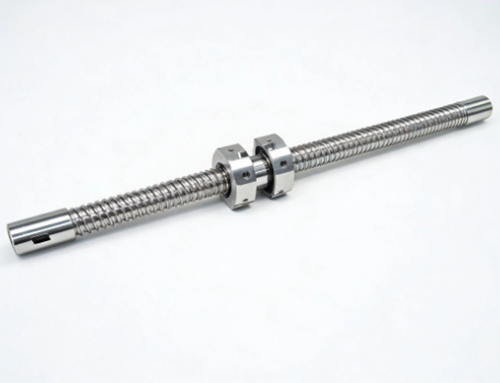
Ball screws are the backbone of precision mechanical transmission systems, converting rotary motion into linear motion with extraordinary accuracy. They are essential components in CNC machine tools, semiconductor manufacturing equipment, aerospace actuators, industrial robots, and high-precision positioning systems. The performance, accuracy, and service life of a ball screw depend fundamentally on the quality of its thread raceway grinding — the final and most critical manufacturing step.

                                CBN Grinding Wheels for High-Precision Ball Screw Manufacturing


This comprehensive technical guide, prepared by More Superhard, a China-based manufacturer of advanced superabrasive grinding tools, covers the complete spectrum of CBN grinding wheel selection, process parameter optimization, and quality control for ball screw and nut thread raceway grinding. Whether you manufacture standard-grade ball screws for general automation or ultra-precision C0-grade screws for semiconductor wafer stages, the principles and recommendations herein will help you achieve superior results.


Understanding Ball Screw Precision Requirements


Ball screws consist of two primary precision-ground components: the screw shaft (external thread raceway) and the nut (internal thread raceway). Together with recirculating ball bearings, they form a low-friction, high-efficiency linear motion system.
Precision Grade Standards (JIS B 1192):
  • C0 grade: ±4μm per 300mm travel, ±8μm total accumulated error — used in semiconductor equipment and ultra-precision positioning
  • C1 grade: ±5μm per 300mm — high-end CNC machines and measurement equipment
  • C3 grade: ±12μm per 300mm — standard precision CNC machines
  • C5 grade: ±18μm per 300mm — general automation and industrial applications
The tighter the grade, the more demanding the grinding process — and the more critical the choice of CBN grinding wheel becomes.


Core Technical Challenges in Ball Screw Thread Grinding

1. High-Hardness Material Processing

Ball screw shafts are typically manufactured from GCr15 (bearing steel, equivalent to AISI 52100) or 50CrMo4 (alloy steel). After induction or through-hardening, surface hardness reaches HRC 58-62. Thread raceway grinding is performed as a post-hardening finishing operation, meaning conventional aluminum oxide grinding wheels experience rapid wear, poor efficiency, and inconsistent accuracy. CBN (Cubic Boron Nitride) abrasives, with hardness of 4500-5000 HV compared to aluminum oxide's 2000-2500 HV, are essential for productive grinding of these hardened surfaces.

2. Extreme Lead Accuracy Requirements

For a C0-grade ball screw, the allowable lead error is just 4 micrometers over any 300mm of travel. This extraordinary tolerance places immense demands on CBN grinding wheel form retention, thermal stability of the grinding process, and the underlying precision of the thread grinding machine itself.

3. Thread Raceway Profile Accuracy

Ball screw raceways feature a Gothic arch (double arc) or single circular arc profile. The contour accuracy directly affects ball-to-raceway contact angle, load distribution, and motion smoothness. Profile tolerances are typically ±2-3μm, requiring grinding wheels that maintain their dressed form throughout extended production runs.

4. Surface Integrity Requirements

Thread raceway surfaces must be free from grinding burns, microcracks, and altered metallurgical layers. Surface roughness requirements are stringent: Ra ≤ 0.2-0.4μm for C3-C5 grades, and Ra ≤ 0.1μm for C0-C1 grades. Surface residual stress must be compressive to enhance fatigue life.

5. High Slenderness Ratio Challenges

Ball screws with length-to-diameter ratios ≥ 30 are susceptible to deflection, vibration, and chatter during grinding, requiring steady rest supports and controlled grinding forces.

6. Nut Internal Thread Accessibility

Grinding the nut's internal thread raceway presents unique challenges: limited space, long slender grinding wheel arbors with length-to-diameter ratios of 10-20:1, and the need for adequate peripheral speed within confined geometries.

7. Batch Production Efficiency

Ball screws are produced in batch quantities, demanding CBN grinding wheels with exceptionally long life and stable dressing intervals to minimize non-productive time and ensure consistent quality.


CBN Abrasive Selection: The Foundation of Performance


                                 CBN Grinding Wheels for High-Precision Ball Screw Manufacturing

CBN vs. Conventional Abrasives

Aluminum Oxide (Conventional): Hardness 2000-2500 HV, short life requiring dressing after every few workpieces, thermal stability up to 1200°C. Results in low productivity, frequent dressing, and inconsistent accuracy.
CBN (Cubic Boron Nitride): Hardness 4500-5000 HV, life 50-100x longer than aluminum oxide, thermal stability exceeding 1400°C. Delivers dramatically reduced dressing frequency, consistent accuracy, and high productivity.
Recommended CBN Grade: CBN-B type (medium toughness) offers the optimal balance between cutting sharpness and grain retention strength for ball screw grinding applications.

Grit Size Selection by Process Stage

Rough Grinding / Forming: B91-B126 grit for large stock removal (0.2-0.4mm per side), leaving 0.03-0.05mm stock for finishing.
Finish Grinding / Profiling: B46-B64 grit for final thread raceway profiling. Target: profile accuracy ±2-3μm, Ra ≤ 0.2μm.
Ultra-Finish / Spark-Out: B20-B30 grit for ultra-precision screws (C0-C1 grade). Target: Ra ≤ 0.1μm, elimination of residual grinding stress.


Bond System Selection

Vitrified (Ceramic) Bond — Preferred for External Thread Grinding

Excellent rigidity, high temperature resistance, superior form retention, and straightforward dressing. The first choice for screw shaft external thread raceway grinding, providing the best form retention essential for maintaining the Gothic arch or circular arc profile across hundreds of grinding passes between dressing operations.

Resin Bond — Preferred for Internal Thread Grinding

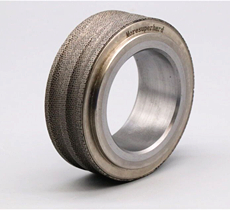
Good elasticity, excellent self-sharpening, superior surface finish capability. The lower grinding forces achievable with resin bond are critical for internal grinding where slender wheel arbors are susceptible to deflection and vibration.

Metal Bond — For High-Volume Standard Production

Maximum strength, longest wheel life, highest grain retention. Suitable for large-batch standard ball screw production where maximum wheel life is prioritized over ease of dressing.


Wheel Concentration and Hardness Specifications

Screw Shafts (External Thread): Concentration 150%-200% for maximum form retention. Hardness R-grade (hard) to super-hard for maximum profile stability.
Nuts (Internal Thread): Concentration 125%-175% balancing cutting ability with form retention. Hardness N-grade (medium-hard) to P-grade (hard), allowing some self-sharpening while maintaining form stability.


Grinding Wheel Geometry and Structural Design

Single-Line Wheel: For thread raceway form grinding of large-pitch, high-precision ball screws. Profile accuracy ±2μm.
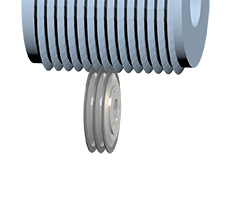
Multi-Line Wheel: For batch production of small to medium-pitch ball screws. Multiple parallel threads multiply productivity.
Form Wheel (Custom Profile): Precisely matched to Gothic arch or single circular arc raceway geometry. Profile accuracy ±1.5μm.
Slender Arbor Wheel (Internal Thread): Length-to-diameter ratio 10-20:1 with high-rigidity design and vibration-damping features.
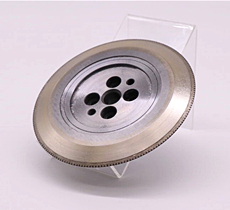
Large-Diameter Thread Grinding Wheel: φ200-500mm for dedicated thread grinding machines with high-precision dynamic balancing.


Optimized Process Parameters

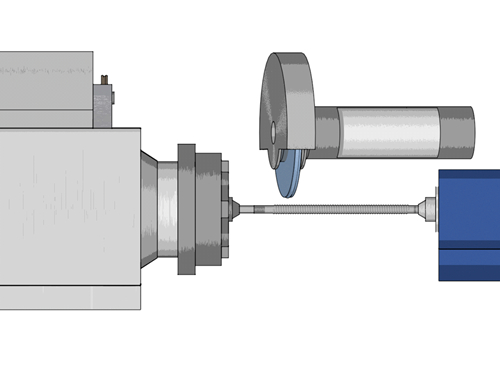
Screw Shaft External Thread Grinding (GCr15, HRC 60, φ40mm, 10mm lead, 1000mm, C3 grade)

Rough Grinding (0.2-0.4mm per side): Wheel speed 60-80 m/s, radial depth 0.01-0.03mm/pass, workpiece speed 20-50 rpm, axial feed 100-300 mm/min, high-pressure emulsion coolant at 10-20 bar.
Finish Grinding (0.005-0.015mm remaining): Wheel speed 50-65 m/s, radial depth 0.003-0.008mm/pass, 3-5 spark-out passes (no infeed), continuous high-pressure coolant.
Ultra-Finish (C0-C1 grade): Radial depth 0.001-0.003mm (nanometer-scale infeed), 6-8 spark-out passes for ultimate surface quality.

Nut Internal Thread Grinding (GCr15, HRC 58, M20×2.5, C3 grade)

Wheel speed 30-50 m/s (limited by internal space), radial depth 0.003-0.01mm/pass, workpiece speed 50-100 rpm, high-pressure internal cooling at 20-30 bar delivered through the arbor center directly to the grinding zone.


Coolant System Design: A Critical Success Factor


Screw Shafts: Extreme-pressure emulsion (5-8%), flow rate 60-120 L/min, pressure 15-25 bar with multiple nozzles aimed at the grinding arc, filtration ≤15μm.
Nuts: Extreme-pressure emulsion or oil-based coolant, flow rate 10-20 L/min, pressure 20-30 bar via through-arbor internal cooling, filtration ≤10μm.
Special Requirements: Slender shafts (L/D ≥ 30) require follow-rest or steady-rest support. Nut internal grinding absolutely requires through-arbor center cooling — external coolant delivery cannot reach the grinding zone effectively.


Wheel Dressing Strategy

Diamond Roller Dresser (Form Dressing): Infeed 0.3-0.5μm/revolution, frequency every 5-20 ball screws, profile accuracy ±1.5μm matched to target contour.
Diamond Stylus Dresser: Infeed 0.005-0.01mm/pass, frequency every 1-5 workpieces, suitable for small-batch high-mix production.
Key Principles: Always perform 2-3 spark-out dressing passes after form dressing. Verify wheel profile accuracy after dressing (tolerance ≤ ±2μm). Trigger dressing when lead error exceeds specification, surface roughness degrades, or grinding power increases abnormally.


Quality Control and Inspection

Lead Error: Laser interferometer or linear encoder measurement. C3: ≤12μm/300mm. C0: ≤4μm/300mm.
Raceway Profile: Profile measurement instruments or dedicated ball screw measuring machines. Focus on arc radius and contact angle conformity.
Surface Integrity: Nital etch testing for burn detection. Metallographic examination for altered layer depth (≤3-5μm). Surface roughness Ra verification.


Recommended Complete Process Routes

C3-Grade Screw (φ40mm, GCr15, HRC60, 10mm lead, 1000mm)

Rough Grind: Vitrified CBN B91, 200% concentration, R-grade. Wheel speed 70m/s, depth 0.02mm. Leave 0.05mm stock.
Finish Grind: Vitrified CBN B54, 175% concentration, Q-grade. Wheel speed 60m/s, depth 0.006mm, 4 spark-out passes. Target: profile ±3μm, Ra ≤0.15μm, lead error ≤12μm/300mm.
Ultra-Finish (optional): Vitrified CBN B20-30, 150% concentration, P-grade. Wheel speed 50m/s, depth 0.002mm, 6 spark-out passes. Target: Ra ≤0.08μm.

C3-Grade Nut (M20×2.5, GCr15, HRC58)

Rough Grind: Resin CBN B64, 175% concentration, P-grade. Wheel speed 40m/s, depth 0.008mm, high-pressure internal cooling. Leave 0.03mm stock.
Finish Grind: Resin CBN B46, 150% concentration, P-grade. Wheel speed 35m/s, depth 0.003mm, 4 spark-out passes, high-pressure internal cooling. Target: profile ±3μm, Ra ≤0.15μm.


About More Superhard

More Superhard (Henan Moao Superhard Materials Co., Ltd.) is a China-based manufacturer specializing in CBN and diamond superabrasive grinding tools. The company designs and manufactures custom grinding wheels for ball screw thread grinding, semiconductor wafer thinning, automotive component machining, and other precision manufacturing applications. Contact More Superhard's technical team for customized CBN grinding wheel solutions tailored to your ball screw manufacturing requirements.

 
FOLLOW US
This Blog keeps our valued customers informed of important Radiac News and Events, and in the industries we serve.
Copyright © 2003-2023 More SuperHard Products Co., Ltd
Home
Whatsapp
E-mail
Inquiry