NEWS
05
Oct

Bearing Raceway Superfinishing with Honing Stones

Share:

Why Bearing Raceway Superfinishing Demands a Two-Stage Plan


                  Bearing Raceway Superfinishing with Honing Stones

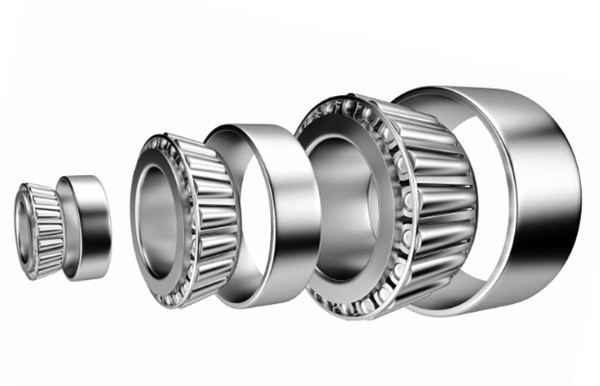
The bearing raceway is the working surface of every bearing, and it carries demanding requirements for surface roughness, dimensional accuracy, and surface texture. When a customer asks for a mirror finish on a bearing-steel raceway—typically GCr15 at about 56 HRC, with a superfinishing allowance of only 0.006–0.015 mm and a target of Ra ≤ 0.02 µm—the right answer is a two-stage process: raceway forming (grinding) followed by honing-stone mirror superfinishing. The grinding stage establishes size and arc accuracy; the honing stones then improve roughness, waviness, and surface texture. Superfinishing is not a tool for correcting raceway shape—it refines what precision grinding has already created.


Typical Customer Requirements and What They Mean


A real-world bearing raceway superfinishing project often looks like this:
  • Target roughness: Ra ≤ 0.02 µm
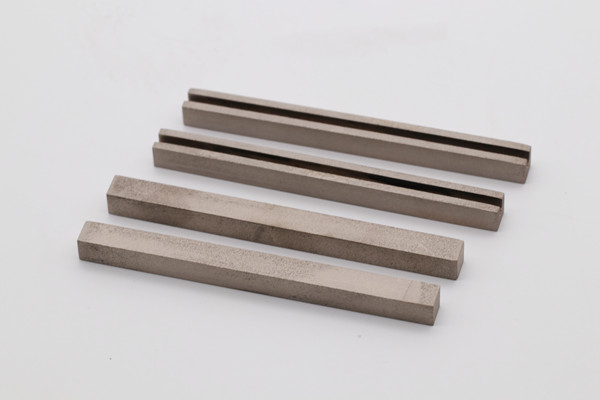
  • Honing stone sizes: 1.1 × 1.1 × 4 mm and 3 × 3 × 25 mm
  • Result required: mirror surface with a very fine, uniform superfinishing pattern
  • Workpiece material: bearing steel (GCr15), hardness 56 HRC
  • Superfinishing allowance: 0.006–0.015 mm

These requirements show the essence of superfinishing: within a 6–15 µm allowance, the process must control size, raceway arc, and surface texture simultaneously. That is why the final honing stone formula should always be tuned through trial machining on the customer's actual equipment, raceway size, and parameters—to deliver stable results in batch production.


Honing Stone Selection: Abrasive, Grit, and Bond


                     Bearing Raceway Superfinishing with Honing Stones


Honing stones must be designed for the raceway shape and machine parameters. For bearing steel, high-purity white aluminum oxide (WA) is the first choice; fine-grit CBN is an option when even higher finish or longer stone life is required. Matching grit size, bond hardness, and structure balances removal rate, surface quality, and stone life:
  • Initial grit (removing grinding marks): WA 1000#–1500#
  • Finishing grit (smoothing): WA 1500#–2000#
  • Mirror-grade grit (ultra-fine): WA 2000#–3000#
  • Bond: resin-bond stones are recommended for mirror finishing of hard materials—ceramic bonds tend to give less ideal results in this application
Never rely on grit alone to create a mirror finish. If the previous grinding step left errors in arc, roundness, waviness, or grinding marks, no fine stone can make the mirror stable. Superfinishing success is the combined result of "pre-finishing accuracy + stone shape + grit + pressure + oscillation + oil".


The Two-Stage Superfinishing Process for Mirror Raceways


                      honing stone

For mirror requirements, a two-stone sequence is recommended:

Stage 1 – Remove grinding marks:
  1. Use WA 1000#–1500# to remove the grinding marks and micro-scratches left by the previous operation.
  2. Control raceway shape and waviness at this stage; do not expect the stone to fix form errors.

Stage 2 – Mirror superfinishing:
  1. Switch to WA 2000# → 3000# with low pressure and high-frequency small oscillation.
  2. Supply dedicated superfinishing oil continuously for full lubrication.
  3. Let the Ra drop progressively until the raceway shows a uniform mirror / semi-mirror effect.
If the customer demands even higher finish—Ra ≤ 0.01 µm—consider ultra-fine stones or CBN superfinishing stones. Reported raceway superfinishing solutions can reach about Ra 0.01 µm or lower, but this requires excellent pre-grinding, accurate stone shape, tuned oscillation, and clean oil.


Recommended Starting Parameters for Bearing Raceway Superfinishing


If no proven parameters exist, start from this baseline for GCr15 at about HRC 60:
  • Workpiece speed: 100–300 rpm
  • Stone oscillation: small angle, high-frequency reciprocation; start at ±10° to ±15° per side
  • Stone pressure: start low and increase gradually
  • Grit sequence: 1000#/1500# to remove grinding marks, then 2000#/3000# for mirror finishing
  • Coolant: continuous supply of dedicated superfinishing oil
Bearing raceway superfinishing fundamentally requires low speed, low pressure, and reciprocating oscillation. The exact pressure and frequency must be adjusted on site according to raceway size, equipment, and stone dimensions.


Common Raceway Superfinishing Defects and How to Fix Them


Even with a well-designed stone sequence, results can fall short. The most common defects in bearing raceway superfinishing and their corrective actions:
  • Grinding marks still visible after superfinishing: the first-stage grit was too coarse or spark-out was too short—use WA 1000#–1500# longer or move to a finer first stage.
  • Uneven or patchy mirror: stone pressure too high or oscillation inconsistent—lower pressure and stabilize the high-frequency small oscillation.
  • Burning or discoloration on the raceway: insufficient oil or too much pressure—increase superfinishing oil flow and reduce load.
  • Raceway arc distorted: superfinishing was used to compensate for grinding error—return to the grinding stage and correct arc/roundness before honing.
  • Stone glazing (loses cutting action): grit too fine for the remaining stock or bond too hard—re-check the two-stage sequence and match bond hardness to the low-pressure regime.
  • Inconsistent batch results: coolant condition, stone wear, or oscillation settings drifting—standardize oil concentration, stone dressing intervals, and machine settings.
The most common root cause of all these defects is the same: expecting superfinishing to fix what the grinding stage should have delivered. Keep the rule in mind—grind to size and arc first, then refine with stones—and most problems disappear.


Three Process Options to Offer Customers


Based on the customer's actual requirements, present three clear options:
Option A – Standard high-precision raceway:
GCr15 heat treatment → form grinding → WA 1000#/1500# honing stone → superfinishing oil → Ra about 0.03–0.08 µm
Option B – Mirror raceway:
GCr15 heat treatment → precision form grinding → WA 1500# → WA 2000# → WA 3000# → dedicated oil → Ra target ≤ 0.02 µm
Option C – Premium mirror / low-friction raceway:
Precision grinding → CBN or WA honing stones, 2000#–3000# or finer → low pressure, high-frequency oscillation → dedicated oil → Ra target at the 0.01 µm level


The Key Principle: It Is a System, Not a Single Variable


Mirror superfinishing cannot be bought with a finer stone alone. The stable mirror is the product of preceding form accuracy, stone geometry, grit selection, low-pressure oscillation, and dedicated oil—working together. For bearing manufacturers, the winning approach is: grind the raceway to size and arc accurately, then let a well-matched two-stage honing stone sequence refine roughness and texture to the mirror level the customer wants, batch after batch.


Why Choose Our Bearing Raceway Superfinishing Stones


We supply superfinishing honing stones engineered for bearing raceways—including custom sizes such as 1.1 × 1.1 × 4 mm and 3 × 3 × 25 mm—in WA and CBN abrasives with precision-matched grit, bond, and structure. Our engineers help you design the two-stage sequence (grinding-mark removal + mirror superfinishing), define starting parameters (speed, oscillation, pressure), and tune the formula through trial machining for stable batch results. Contact us with your bearing material, hardness, raceway geometry, and target Ra—we will build the mirror-finish superfinishing solution for you.


Frequently Asked Questions

Q: What grit honing stone is best for bearing raceway superfinishing?
A: Use WA 1000#–1500# first to remove grinding marks, then WA 2000#–3000# for mirror finishing. For very high requirements (Ra 0.01 µm level), consider ultra-fine or CBN superfinishing stones. Grit alone cannot fix poor pre-grinding.

Q: Can superfinishing correct raceway shape errors?

A: No. Superfinishing improves roughness, waviness, and surface texture; it does not correct raceway arc, roundness, or form errors. The raceway must be ground to size and arc accuracy before honing.

Q: What parameters should I start with for GCr15 raceway superfinishing?

A: A good starting point: workpiece speed 100–300 rpm, small-angle high-frequency oscillation (±10° to ±15° per side), low stone pressure increased gradually, and continuous dedicated superfinishing oil. Adjust on site per raceway size and equipment.

Q: Resin or ceramic bond for mirror superfinishing of bearing steel?

A: For mirror finishing of hard bearing steel, resin-bond stones are recommended—ceramic bonds tend to give less ideal results in this application. The bond must match the low-pressure, high-frequency oscillation regime.

Q: How do I reach Ra 0.02 µm or lower on a bearing raceway?

A: Follow a two-stage sequence: WA 1000#–1500# to remove grinding marks, then WA 2000#–3000# under low pressure with high-frequency oscillation and dedicated oil. For Ra ≤ 0.01 µm, use finer or CBN stones and ensure excellent pre-grinding and clean oil.

Q: What honing stone size should I use for a bearing raceway?

A: Stone size depends on raceway shape and machine. Common sizes include 1.1 × 1.1 × 4 mm and 3 × 3 × 25 mm. The stone must be shaped to match the raceway arc and matched to the oscillation and pressure of your machine.
 
FOLLOW US
This Blog keeps our valued customers informed of important Radiac News and Events, and in the industries we serve.
Copyright © 2003-2023 More SuperHard Products Co., Ltd
Home
Whatsapp
E-mail
Inquiry