NEWS
18
Nov

Custom CBN Wheels for Crankshaft Grinding

Share:

The Inquiry That Did Not Ask for a Price


A German manufacturer of commercial-vehicle compressors and precision-machined components sent a sourcing enquiry that contained no drawing and no quantity. What it contained was three questions, in a deliberate order: can you manufacture custom grinding wheels to customer drawings at all; do you have experience with comparable precision, automotive, gear or compressor tooling; and if the answer to both is yes, may we send the technical drawing and a formal RFQ.
The company is based in Chemnitz, has around 25 years of precision parts experience, and works built-to-print for commercial vehicle, refrigeration and medical customers. The person writing was a chief procurement officer, not a buyer working through a portal. That combination—senior decision-maker, capability gate before price gate, drawing withheld until competence is confirmed—is the signature of a serious industrial sourcing process. It is also, for a Chinese grinding wheel manufacturer, a much better sales opportunity than a price-driven enquiry, because it converts into a technical relationship instead of a one-off order.


Why Crankshaft Grinding Is a Demanding Wheel Application


A crankshaft is the least forgiving shaft in a compressor or engine. It carries several main journals and offset crank pins on one forging or billet, all of which must be round, cylindrical, on-centre and free of grinding burn, while the fillet radius under each shoulder controls fatigue life more than any other geometry on the part. Grind too aggressively and the fillet develops residual tensile stress and the shaft fails in service; grind too gently and the cycle time destroys the business case.
That produces a specific set of wheel requirements, and they do not all point the same way:
  • Pin and journal diameters need tight roundness and taper control, which favours a rigid CBN wheel at high peripheral speed and a stable dressing regime.
  • Pin lengths differ, so wheel width has to be matched to each pin—usually one dedicated wheel per pin size, not a single wide wheel covering the family.
  • Fillet geometry must be reproduced exactly, which means either a profiled wheel or CNC contouring with a narrow wheel—two different specification routes with very different cost structures.
  • Thrust faces and undercuts add features that a plain straight wheel cannot reach, so the wheel set often includes more than one specification for the same part.
  • Heat damage is unacceptable on a hardened shaft, so the bond has to keep the wheel open and the coolant delivery has to reach the arc.
This is why crankshaft work is one of the last areas where conventional aluminium oxide still holds ground in some shops—but where CBN, correctly specified, delivers the step change in cycle time and size consistency that makes a new line viable.


What the Three Questions Actually Test

 
Question asked What the buyer is really checking What a weak answer looks like
Can you manufacture to our drawings? Whether you are a wheel maker or a wheel reseller; whether you can hold a profile, a width and a bore to print A catalogue page and a stock list
Do you have comparable experience? Whether you have solved crankshaft, compressor or gear geometry before, not just general surface grinding Generic "we have 20 years experience" with no application named
May we send the drawing and RFQ? Whether a technical dialogue will follow, with real parameters and a trial plan Immediate request for quantity and target price

Notice what is absent: price, MOQ and lead time. Those come later, once technical fit is established. Answering the first enquiry with a quotation is therefore a category error—it signals that you did not read the letter. Answering it with a technically literate confirmation and one specific question back is what moves the file forward.


How to Answer in 48 Hours


A senior procurement officer evaluating several suppliers will judge responsiveness as a proxy for manufacturing discipline. The reply should be short, specific and structured in the same order as the questions:
  1. Confirm built-to-print capability explicitly: custom CBN and diamond wheels, profile and width to drawing, bore and balance to specification, with a dimensional report per batch.
  2. Name the application experience: crankshaft journal and pin grinding, compressor shafts, gear and transmission parts—with the wheel types and parameters used, not adjectives.
  3. State what you need to quote: drawing with tolerance and profile, material and hardness of the workpiece, machine model and wheel speed, coolant type, target cycle time and expected annual volume.
  4. Offer a trial path: one or two wheels at production specification, a first-article dimensional report, and a defined acceptance criterion before volume.
  5. Close with a commercial frame: Incoterm, indicative lead time for a first article, and willingness to sign an NDA before drawings are exchanged.
That is a page, not a brochure. It also answers the implicit fourth question—"will working with you be easy?"—which is what a CPO is actually weighing when comparing a Chinese supplier against a European one.


The Specification Block a Crankshaft Wheel Needs

 
Parameter Typical range for crankshaft CBN wheels Why it matters
Abrasive CBN (cubic boron nitride) Hardness and thermal stability on hardened steel above 55 HRC
Bond Vitrified for profiled/creep-feed work; plated or resin for narrow pins and form grinding Determines profile retention, dressing method and open-face behaviour
Grit size B46–B126 depending on Ra target and stock allowance Trade-off between finish and material removal rate
Concentration 125–150 for profile work; lower for free-cutting narrow wheels Profile retention versus self-sharpening
Wheel speed 80–140 m/s, machine-dependent Higher speed reduces effective chip thickness and burn risk
Wheel width Matched to individual pin or journal length One wheel per pin size is normal practice
Profile Fillet radius formed in the wheel, or generated by CNC with a narrow wheel Two routes with different cost and lead time
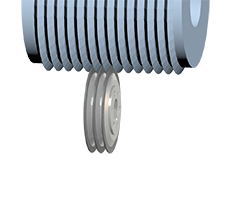
Dressing Rotary diamond dresser, or profile diamond roll for formed wheels Consistency of fillet geometry across the batch
Coolant High-pressure, directed at the arc; filtration matched to grit size Prevents loading and burn on hardened shafts

Two of these rows decide the commercial outcome. Wheel width matched per pin means a set rather than a single wheel, which changes the quotation structure. Profile route means either a formed wheel with longer lead time and higher unit cost, or a narrow wheel plus programming support—cheaper per wheel, more demanding on the customer's process engineering. A supplier who can explain that trade-off is a partner; one who quotes a single part number is a vendor.


                             CBN Wheels for Crankshaft Grinding


First Article, Then Volume: A Three-Stage Trial


Crankshaft wheels are not validated on a price list. They are validated on a shaft. The defensible sequence is three stages, and it should be proposed before the customer asks for it:
  • Stage 1—Drawing review: confirm profile, width, bore, balance grade and permissible wheel speed, and flag any tolerance that is not achievable in the proposed bond before quoting.
  • Stage 2—First article: one wheel at production specification, run on the customer's machine, with a report covering diameter, roundness, taper, Ra and fillet form on a sample shaft.
  • Stage 3—Batch release: agree the acceptance criteria in writing, then scale. Wheel-to-wheel consistency across the batch is the metric that decides whether the supplier stays.
The stage that suppliers most often skip is the first. A drawing review that surfaces one unachievable tolerance builds more trust than a fast quotation, because it demonstrates that someone actually read the print.


Why German Buyers Look to China—and What They Check


The driver is rarely unit price alone. It is capacity, lead time and willingness to take on small, specialised, drawing-defined work that European wheel makers deprioritise against their standard ranges. What a German buyer checks, in roughly this order:
  • Built-to-print discipline: can you manufacture strictly to drawing, without "improving" the specification.
  • Documentation: material certificates, dimensional reports, batch traceability, and a stated acceptance criterion.
  • Process transparency: wheel speed limits, dressing recommendation, and honest limits on what the wheel will not do.
  • Response behaviour: whether the technical questions get answered by an engineer or deflected by a sales template.
None of these are about price. All of them are about whether the part will come out the same in year two as it did in month one.


What MoreSuperHard Brings to a Crankshaft Program


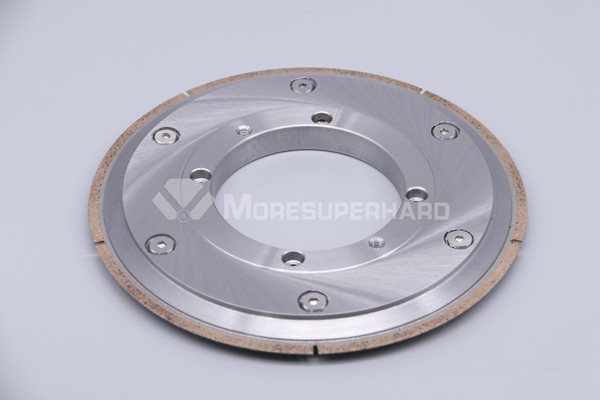
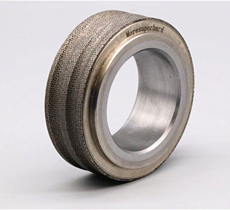
MoreSuperHard manufactures custom CBN and diamond wheels built to customer drawings: crankshaft journal and pin wheels, formed profile wheels with fillet radius, narrow wheels for CNC contouring, and the rotary diamond dressers that keep the profile alive. We work from the drawing and the machine, not from a catalogue range, and we quote the dressing strategy together with the wheel because on a crankshaft the two cannot be separated.
If you are sourcing crankshaft or compressor shaft tooling, send the drawing, the workpiece material and hardness, the machine model and wheel speed, the coolant, and the target cycle time. We will come back with a wheel specification, the dressing method, and a first-article plan—and we will tell you before quotation if a tolerance on the print is not realistically achievable in the bond you have in mind. That conversation is cheaper than a rejected batch.


Frequently Asked Questions


Q: Can you manufacture custom CBN wheels to a customer drawing?
A: Yes. Profile, width, bore, balance grade and permissible speed are built to the drawing, with a dimensional report per batch. Custom work is quoted from the print, not from a standard range.

Q: What information do you need to quote a crankshaft grinding wheel?

A: The drawing with profile and tolerances, workpiece material and hardness, machine model and maximum wheel speed, coolant type, target cycle time and expected annual volume.

Q: Which bond is used for crankshaft CBN wheels?

A: Vitrified for profiled and creep-feed work where profile retention matters; plated or resin for narrow pin wheels and form grinding. The choice follows the geometry and the dressing method.

Q: Why is one wheel per pin size normal on a crankshaft?

A: Because pin lengths differ. Matching wheel width to each pin avoids long overhang and uncontrolled contact, which is what distorts roundness and taper.

Q: How do you control fillet geometry at volume?

A: Either a formed profile in the wheel dressed with a diamond roll, or CNC contouring with a narrow wheel. Both are viable; they differ in unit cost, lead time and the process engineering the customer must own.

Q: Do you provide a first article before volume production?

A: Yes—a drawing review first, then one wheel at production specification run on the customer machine with a report covering diameter, roundness, taper, Ra and fillet form, then batch release against agreed criteria.
 
FOLLOW US
This Blog keeps our valued customers informed of important Radiac News and Events, and in the industries we serve.
Copyright © 2003-2023 More SuperHard Products Co., Ltd
Home
Whatsapp
E-mail
Inquiry